
Agentic AI just crossed the tipping point, and I felt it this week. Everywhere I look, agentic AI is slipping into phones, checkout flows, support queues, and the tools ops teams live in. If you have been waiting for a loud, undeniable signal to build your first real agent, this is it.
Quick answer: Agentic AI is moving from demos to production, fast. Between Feb 8 and 9, 2026, Samsung hinted at Galaxy S26 agent features, Akamai and Visa teamed up to police shopping bots, Forethought users crossed $1B in ROI, UiPath acquired WorkFusion, and IDC told CIOs to plan for agents as the operating model. Start small, wrap every step in tools, add guardrails, and keep human review on sensitive actions.
I start small, wrap every step in tools, add guardrails, and keep human review on sensitive actions.
Why this week felt different
I spent the weekend reading and sketching roadmaps, and five stories lined up into one clear message: autonomy is landing in mainstream workflows, not just chat windows. The stack is less about a bigger model and more about orchestration, verification, and data hygiene. That is good news for builders who prefer shipping to tinkering.
I focus less on a bigger model and more on orchestration, verification, and data hygiene.
Quick refresher: what is agentic AI?
Agentic AI is AI that does work, not just talk about it. It plans, takes multi-step actions, checks its own results, and adapts. Think smart intern energy: read, click, summarize, schedule, verify. The real magic is boring reliability, not flashy prompts.
Samsung is putting agents in your pocket
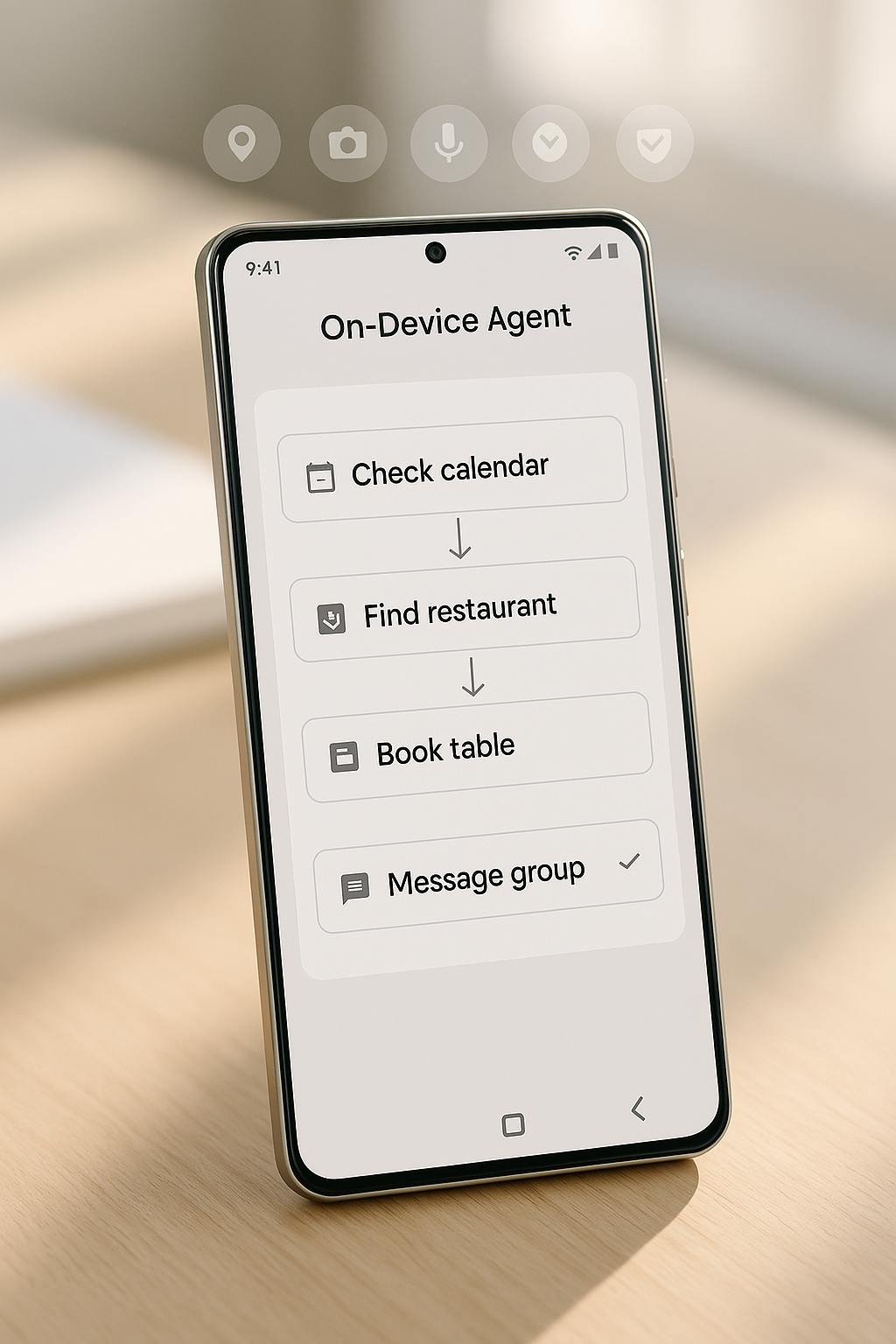
On Feb 9, 2026, The Korea Herald dug into what Samsung means by agentic AI in the upcoming Galaxy S26. The framing grabbed me: not a bolt-on assistant, but a phone that can plan and act across apps. If they ship what they are hinting at, we get normal, everyday flows like checking a calendar, booking a table, and messaging the group without bouncing between apps. Mobile is perfect for agents because it already holds context, permissions, and sensors. If you are building your first agent, design with mobile realities in mind like battery, permissions, and quick local checks.
Bots now need bouncers at checkout
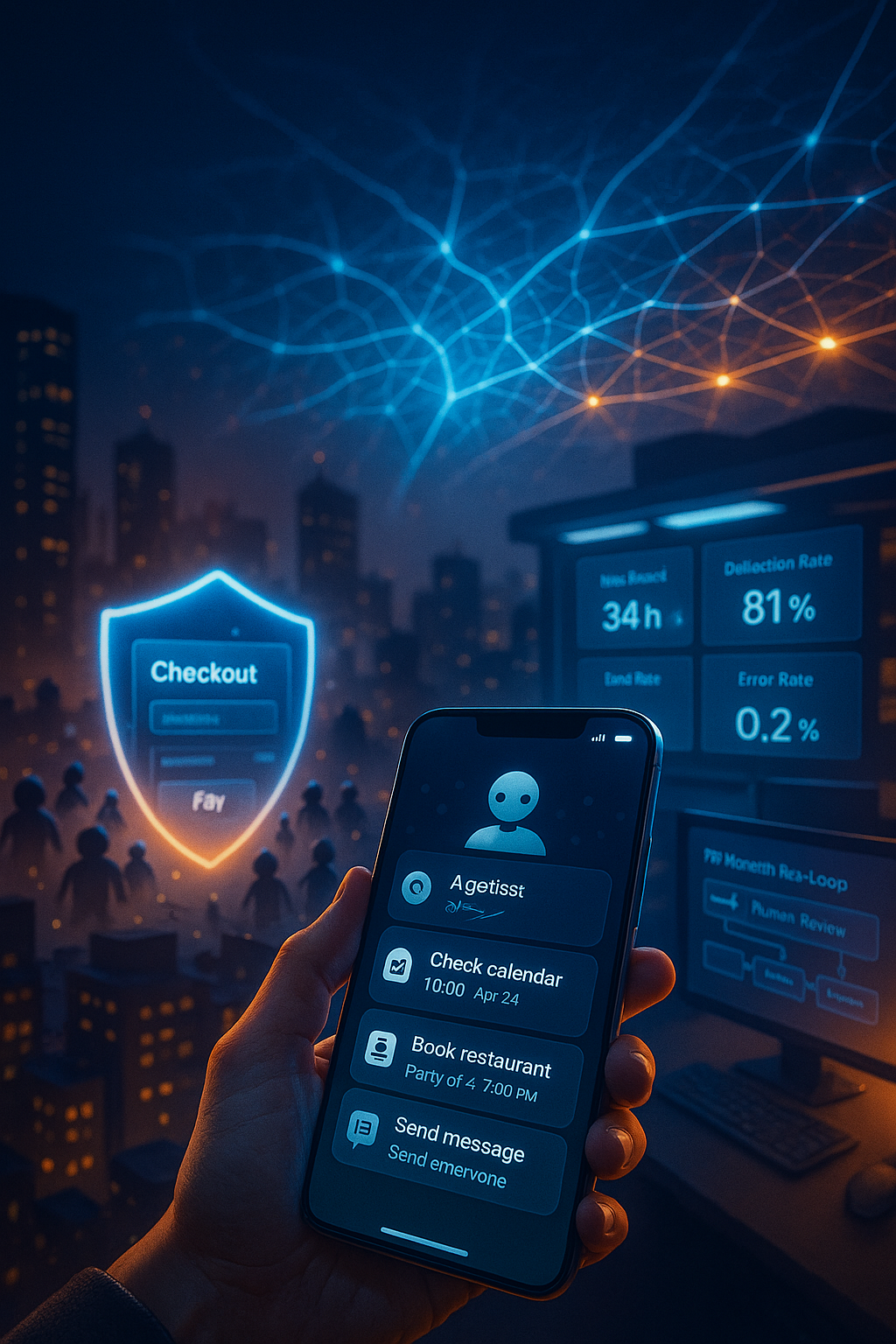
Also on Feb 9, 2026, CDOTrends covered Akamai and Visa partnering to curb AI shopping bots. The same autonomy that makes agents useful also makes them great at scalping, scraping, and gaming promos. Expect stronger verification loops, device trust checks, behavioral signals, and transaction scoring. The simple rule I follow: design agents assuming they will be challenged. Add retries, alternate paths, and explicit user confirmation on anything money-adjacent.
I design agents assuming they will be challenged, and I add retries, alternate paths, and explicit user confirmation on anything money-adjacent.
Real money: $1B ROI claims in support
On Feb 8, 2026, Pulse 2.0 reported customers using Forethought’s agentic AI platform surpassed $1 billion in ROI. Will every team see that? No. But support is where agentic AI prints value first. Tons of historical tickets, clean metrics like handle time and deflection, and repeatable multi-step workflows make it a forgiving sandbox. Start with suggestions and summaries, then move to classification, routing, and finally end-to-end resolution for a narrow set of intents.
The consolidators are moving: UiPath buys WorkFusion
Also on Feb 8, 2026, Insider Monkey covered UiPath acquiring WorkFusion to strengthen its agentic AI portfolio. Classic platform-shift move. The signal I am taking: orchestration is the star, not just the model. If you can kick off plans, verify each step, manage credentials, and handle human-in-the-loop cleanly, you are already ahead of most teams.

IDC says the CIO agenda is shifting to agents
On Feb 9, 2026, IDC Asia/Pacific shared five CIO predictions that make agentic AI the operating model, not a feature. Translation for builders like me: data readiness and policy are about to get real. Clean permissions, clear approvals, and auditable logs matter more than fancy prompts.
Who this is for
If you have been playing with chatbots and want real automation, start here. You do not need a PhD or your own framework. You need one dependable model, one safe place to run actions, and one workflow you can own end to end.
My 7-day starter plan
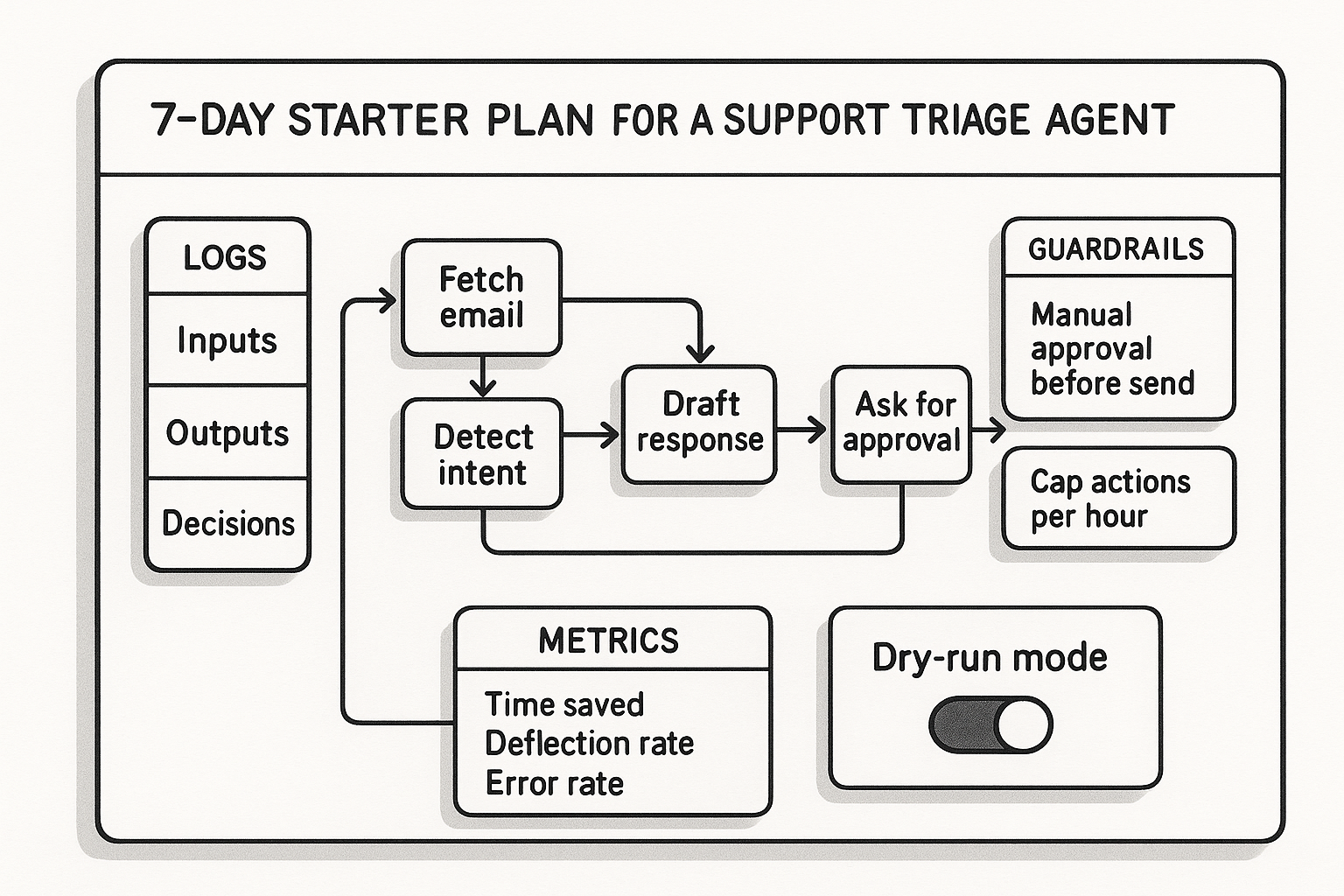
- Pick one high-volume, low-risk workflow. Triage support emails and draft replies with relevant knowledge base links.
- Write plain-English steps. Fetch email, detect intent, find policy, draft response, ask for approval, send.
- Wrap each step in a tool. Log inputs, outputs, and decisions so you can debug fast.
- Add two guardrails. Require approval before sends and cap actions per hour to avoid loops.
- Measure three things. Time saved, deflection rate, and error rate. If it is not improving by day 7, cut scope.
In week one I measure time saved, deflection rate, and error rate; if none improve by day seven, I cut scope.
The simple stack I actually use
I keep it boring and reliable: a strong general model I already trust, lightweight orchestration for quick wins like Zapier or Make before graduating to n8n or Airflow, a tiny vector database or solid search API for memory, and a second pass or rules check before anything customer-facing leaves the building. Consistency beats novelty when you are starting.
A tiny weekend project to prove it works
Build a status update agent that pulls last week’s calendar events and your top Slack or email threads, summarizes by project, and drafts a one-pager. Keep it local, keep logs, and require manual send. It mirrors what Samsung is hinting at for phones and gives you a loop you will actually use.
Security and ethics, the non-negotiables
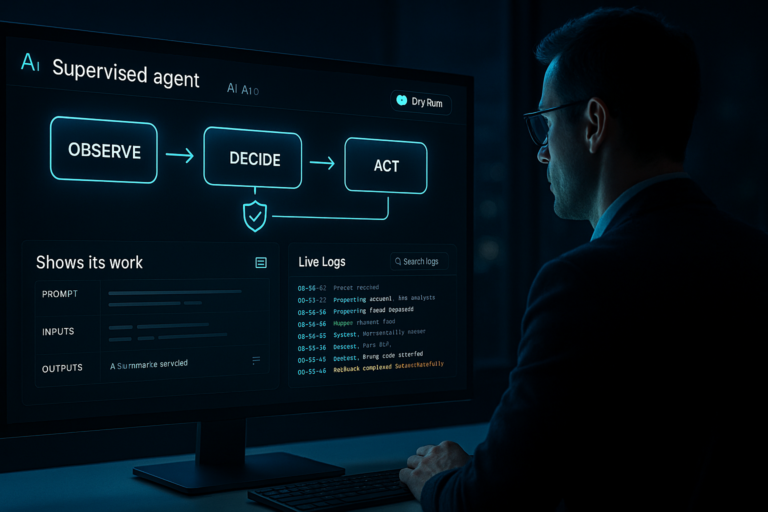
Your agent is not a cute macro. It presses real buttons. Treat API keys, PII, and payment flows like production code from day one. I always ship with a dry-run mode that prints intended actions without executing and only flip to live once testing gets boring. Boredom means the loop is safe.
I always ship a dry-run mode that prints intended actions, and I only flip to live once testing gets boring.
How these stories changed my roadmap
Samsung’s S26 push nudges me to make mobile-friendly agents. Akamai and Visa’s partnership pushes me to design for challenge-response and trust checks. Forethought’s ROI proof keeps me focused on support first. UiPath plus WorkFusion reminds me orchestration is the product. IDC’s predictions tell me to document and govern like it will be audited.
What I am doing next, and what you can steal
I am upgrading my internal support triage agent with better memory tied to policy decisions and a confidence gate that triggers human review when the model is unsure. I am also writing a short agent brief that explains capabilities, limits, where logs live, and how to pause it. Feel free to copy that. It builds trust quickly and cuts down the can you turn it off messages.
FAQs
What is agentic AI in simple terms?
It is AI that completes multi-step tasks for you. It plans, acts, checks, and adapts instead of only chatting. The value shows up when you chain small, reliable steps with clear guardrails.
How do I choose my first workflow?
Pick a high-volume, low-risk task with repeatable steps and clear success metrics. Customer support triage is ideal because you have history, policies, and measurable outcomes like handle time and deflection.
How do I keep agents safe in ecommerce and payments?
Assume challenges at checkout. Add device and behavior checks where possible, require explicit user confirmation for sensitive steps, and log everything. Build for retries and alternative paths when verification fails.
Do I need my own model?
No. Start with a strong general model you already trust. The heavy lifting is orchestration, verification, credentials, and human-in-the-loop, not fine-tuning a frontier model.
What should I measure in week one?
Track time saved, deflection rate, and error rate. If none are improving by day seven, tighten scope, add a verification pass, or simplify the workflow until the loop is consistently reliable.
Final thoughts
Agentic AI is not magic anymore. It is logistics. The news on Feb 8 and 9, 2026 made it obvious that agents will live in your pocket, your checkout, your support queue, and your orchestrator. Ship one well-scoped loop now and you will be ready when your team asks for ten more.