
Agentic AI just went from hype to buildable
Agentic AI is the shift I’ve been waiting for. I’ve been circling this space for months, and on Feb 9, 2026, it finally clicked. Real playbooks landed, real infrastructure signaled up, and there’s now a starter kit that makes weekend projects feel production-bound instead of demo-bound.
I look for a starter kit that makes weekend projects feel production-bound, not demo-bound.
Quick answer: On Feb 9, 2026, Microsoft framed agentic commerce as retail’s new front door, Databricks raised $7B to back agent databases, Singapore published a practical governance model, OpenAI pushed a management mindset, and AWS dropped a full-stack AgentCore template. Start small, design around data, add basic guardrails, and ship one reliable agent this weekend.

The quick pulse
Here’s what changed in one day and why it matters if you’re new to agents:
- Microsoft called agentic commerce the new retail front door and showed how shopper-agents will transact for us (Feb 9, 2026). I read the post and it tracks with what I’m seeing in SMB stores. Read it.
- Databricks raised $7B for an AI agent database, which to me screams memory, tools, and long-running plans need real muscle at scale. Details here.
- Singapore published a model governance framework for agentic AI that actually maps to day-one decisions like autonomy limits, escalation, and auditability (Feb 9, 2026).
- OpenAI compared agent management to human management. I rolled my eyes, tried it, and my agent quality jumped the same week.
- AWS shipped an AgentCore full-stack template on Bedrock so you can stop yak-shaving and start shipping. Grab the template.
I can stop yak-shaving and start shipping with AWS’s AgentCore full-stack template on Bedrock.
Retail’s new front door: autonomous shopping journeys
Microsoft’s agentic commerce shift
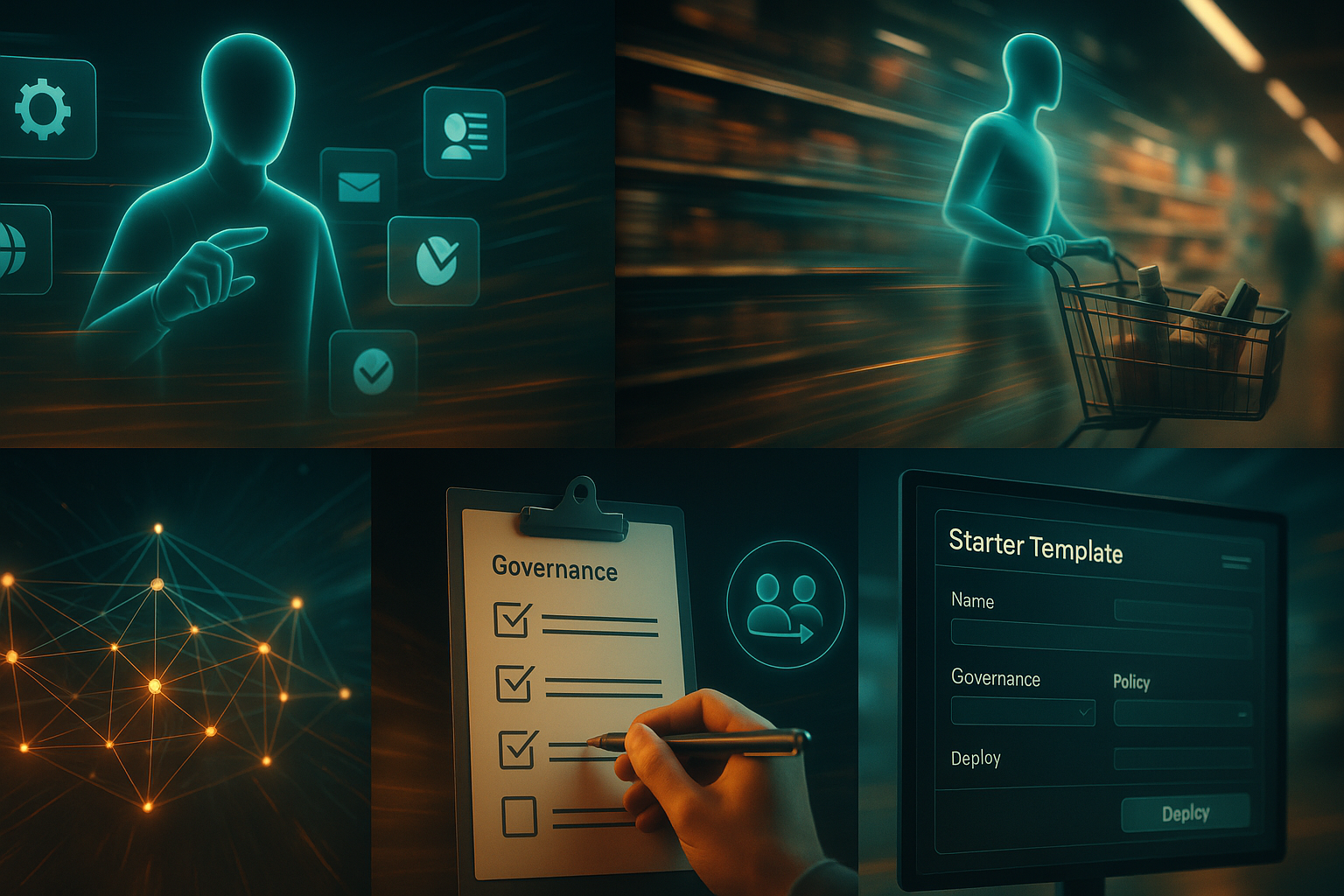
Microsoft’s take on agentic commerce on Feb 9, 2026 put words to what I’m seeing: your next shopper might be an agent acting on someone’s behalf. Not a chatbot. A shopper-agent that can discover, compare, negotiate, bundle, and even reorder without 15 clicks. It made me rethink product data and policies as signals agents use to trust a store.
I now assume my next shopper might be an agent acting on someone’s behalf.
If you’re just starting, don’t boil the ocean. Let an agent own one narrow journey end to end. One of my favorites is backorder recovery: watch thresholds, check suppliers, then prepare a draft PO for review. That’s an agent, not a prompt.
The infrastructure signal: data-first or bust
Databricks and the $7B agent database
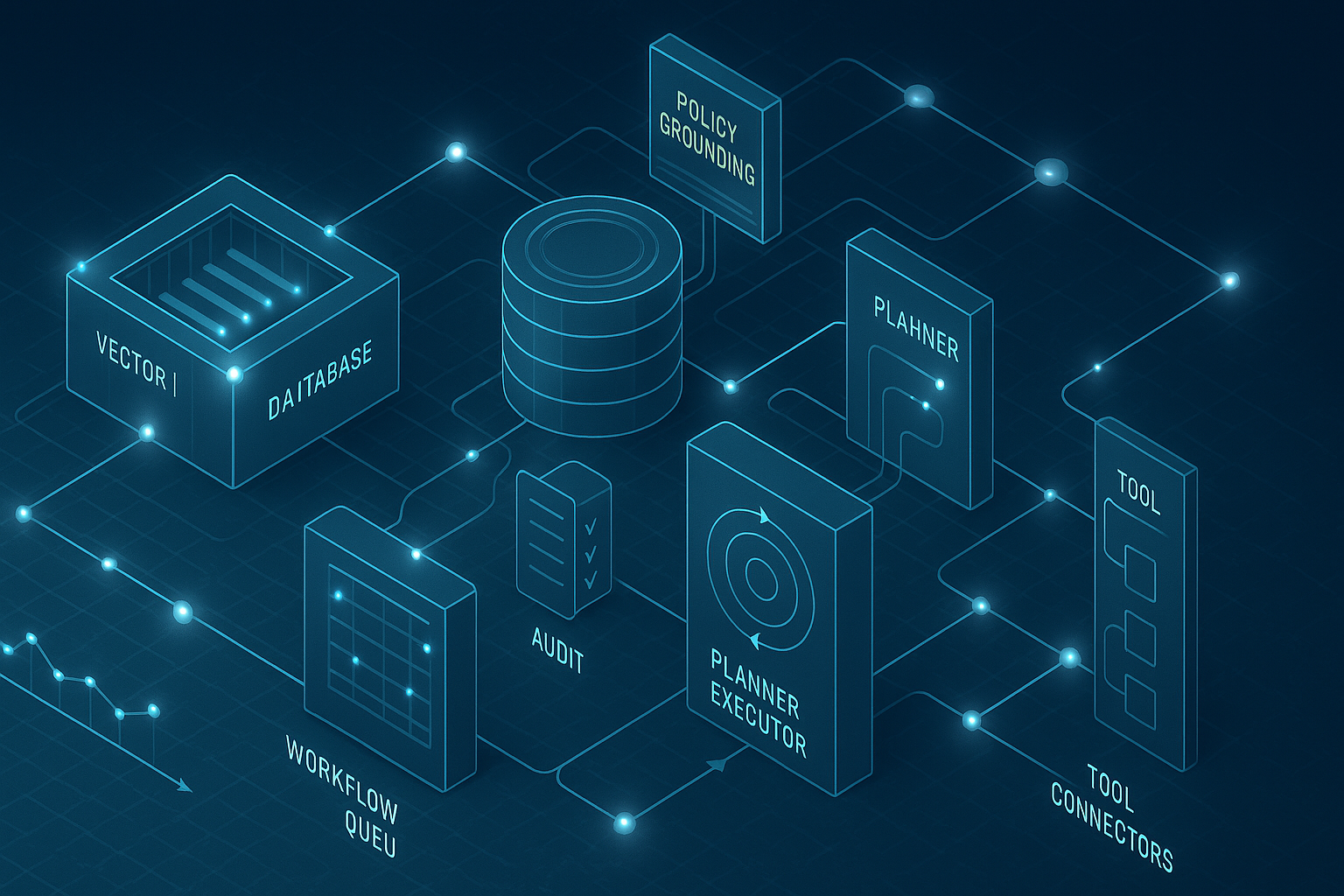
When Databricks put $7B behind an agent database on Feb 9, 2026, I read it as validation that memory, policy grounding, and long-running workflows have outgrown duct tape. You don’t need Databricks on day one, but you do need a source of truth, auditable memory, and a place to store steps. Even a vector store plus Postgres will make a baby agent feel 10x sturdier.
I don’t need Databricks on day one, but I do need a source of truth, auditable memory, and a place to store steps.
I’ve been burned by demo agents that forget last week’s context. This funding round was my reminder to make persistence non-negotiable, even in MVPs.
Governance that isn’t hand-wavy
Singapore’s model for agentic AI
Most governance talk gets vague fast. Singapore’s Feb 9, 2026 framework hits the real builder pain points: task delegation, autonomy boundaries, human checkpoints, and auditability. I’m not writing bank software, but I still want weekend projects to have habits that survive an audit later.
My rule of thumb now: define what the agent can do alone, when it must ask, how actions are logged, where data goes, and how a run is killed cleanly. It’s a checklist, not a bureaucracy.
I define what the agent can do alone, when it must ask, how actions are logged, where data goes, and how a run is killed cleanly.
Manage agents like humans, not scripts
The management metaphor that actually works
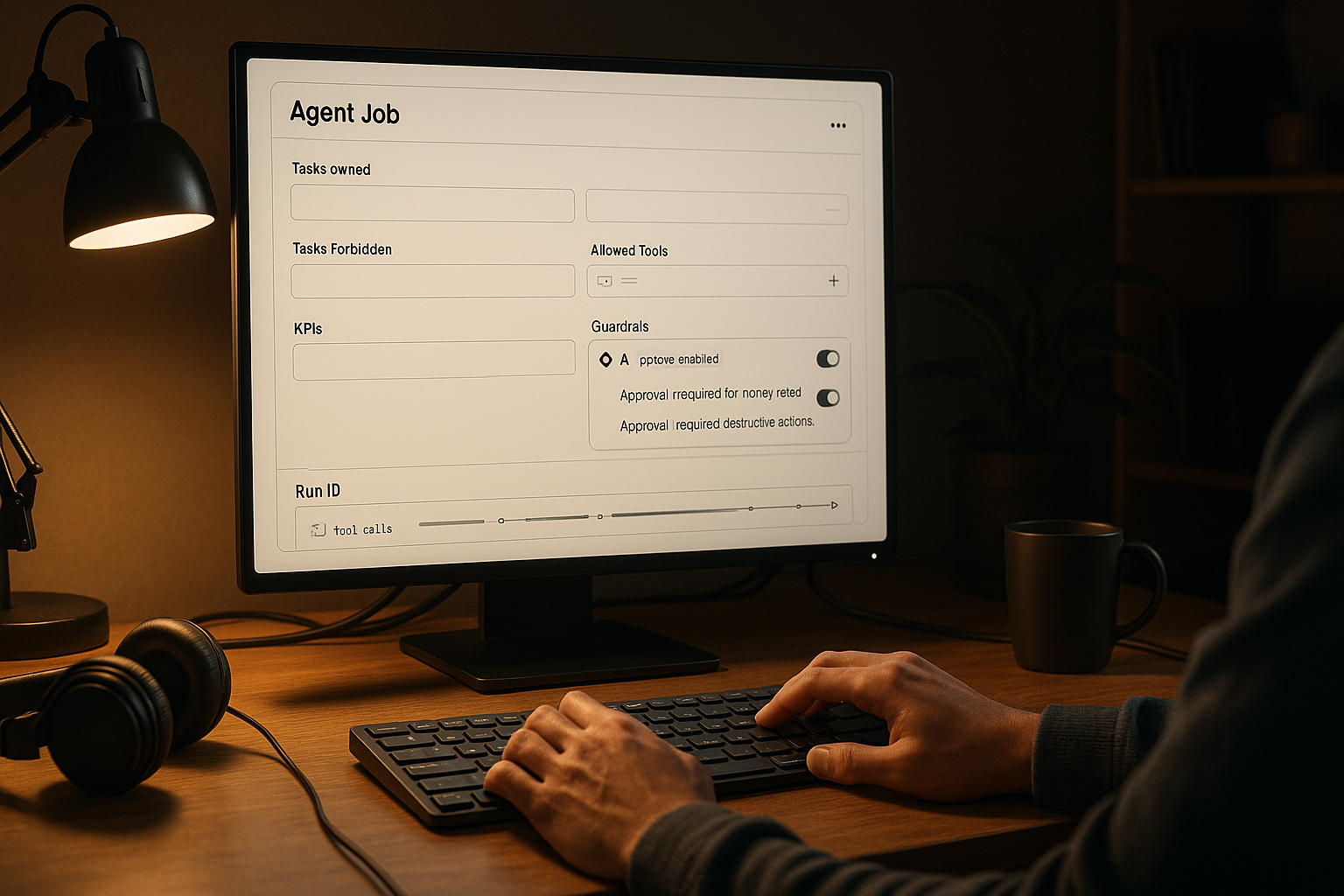
OpenAI’s advice to manage agents like humans sounded fluffy until I tried it. I made a one-page role card: job scope, allowed tools, forbidden tasks, and KPIs like success rate, time to resolution, escalations, and incidents avoided. Debugging got easier because I knew which part of the job broke.
I did this for a simple quote builder and it stopped wandering into research rabbit holes. The job card said: assemble and validate quotes. Not learn the entire internet.
A starter kit you can ship this weekend
AWS AgentCore on Bedrock
Amazon’s full-stack AgentCore template, released Feb 9, 2026, wires up tool use, orchestration, and a basic UI so you can focus on the agent’s job. If you’re staring at an empty repo, this is your push-button start. I’d drop in a retrieval action against internal docs or a CRM lookup and iterate from there.
I love stack freedom, but early on I just need to know if the idea is any good. Stable plumbing makes that obvious.
Start here if you’re new
Pick a tiny, boring win
Choose a repeatable task with clear success criteria that touches one or two systems. In retail, I like mapping equivalent SKUs and proposing the cheapest in-stock option. In support, first-draft replies with two knowledge base links is a sweet spot. If it feels glamorous, it’s probably too big.
Treat data like a first-class dependency
Before prompts, clean the data your agent reads and writes. Normalize product attributes, tighten permissions, and set up a lightweight memory store. Even SQLite or managed Postgres for runs and steps is fine. Sloppy data, not model quality, kills most early agents.
Give your agent a job card
Write down tasks owned, tasks forbidden, tools allowed, escalation rules, and your definition of done. I add one line that pays for itself: when unsure, ask. Prompt spend ticks up a bit, incident spend drops a lot.
Add two guardrails on day one
Keep a human in the loop for anything that moves money, deletes data, or changes inventory. Log every tool call with inputs and outputs tied to a run ID. Those two lines prevent more chaos than any clever prompt trick.
Start with a scaffold
Use AWS AgentCore or an equivalent that gets you from zero to an agent calling a tool with logs in under an hour. Ship something small, learn from real runs, then expand scope as trust grows.
What I’m doing next
I’m turning my quote builder into a procurement scout agent. I’ll keep it small and auditable, piggyback on a starter template, and add a memory table so it stops forgetting vendor outcomes. I’m also doing weekly 1:1s with the agent: review runs, tweak the job card, resist the urge to blow up prompts.
Since shopper-agents are basically customers now, I’m cleaning product data like it’s a storefront. If an agent can parse it fast, a human can too. That’s a win either way.
Why the urgency feels real
On Feb 9, 2026 we got rare alignment: a clear use case, investor conviction, a governance map, a practical management model, and a turnkey starter. If you wait for perfect, you’ll watch competitors quietly automate the tasks you still do by hand.
Give yourself a weekend. Ship one agent that does one thing well. Measure it like a teammate. Guard it like a system. Decide if you want more.
FAQ
What is Agentic AI in simple terms?
Agentic AI is about AI systems that can plan, use tools, and take actions toward a goal, not just answer questions. Think of a reliable assistant that can search, compare, and execute within guardrails you set.
How do I pick my first Agentic AI use case?
Choose a repetitive task with clear success criteria and limited blast radius. One or two integrations is ideal. If you can’t define done in a sentence, it’s too big for a first win.
Do I need a fancy database to start?
No. Start with a simple vector store plus a relational database for runs, steps, and memory. The Databricks news shows where you’ll grow as scale and complexity rise, but you can validate the idea with lightweight pieces.
How do I keep Agentic AI safe in production?
Use least-privilege access, human review for money-moving or destructive actions, and event logging for every tool call. Add a clear kill switch per run. These basics catch most costly mistakes before they land.
What metrics should I track for my first agent?
I track success rate, time to resolution, number of human escalations, incidents avoided, and cost per successful task. These show whether scope, tools, or prompts need attention.