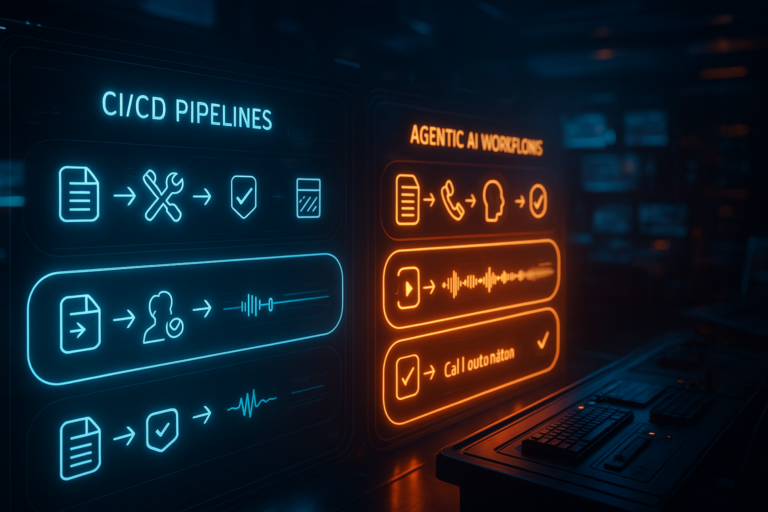


Agentic AI just clicked into a new gear for me. I spent this week catching up, and by February 8, 2026 I realized I needed to stop tinkering and actually ship something.
Quick answer: Agentic AI is moving from demos to production. On Feb 8, 2026 we saw consumer exposure, enterprise adoption, billion dollar ROI claims, healthcare momentum, and a real fraud wake-up call. If you want in, start with one workflow, automate the deterministic steps, add a small agent for triage or summarization, make it show its work, and require approvals for money or identity tasks.
What changed this week
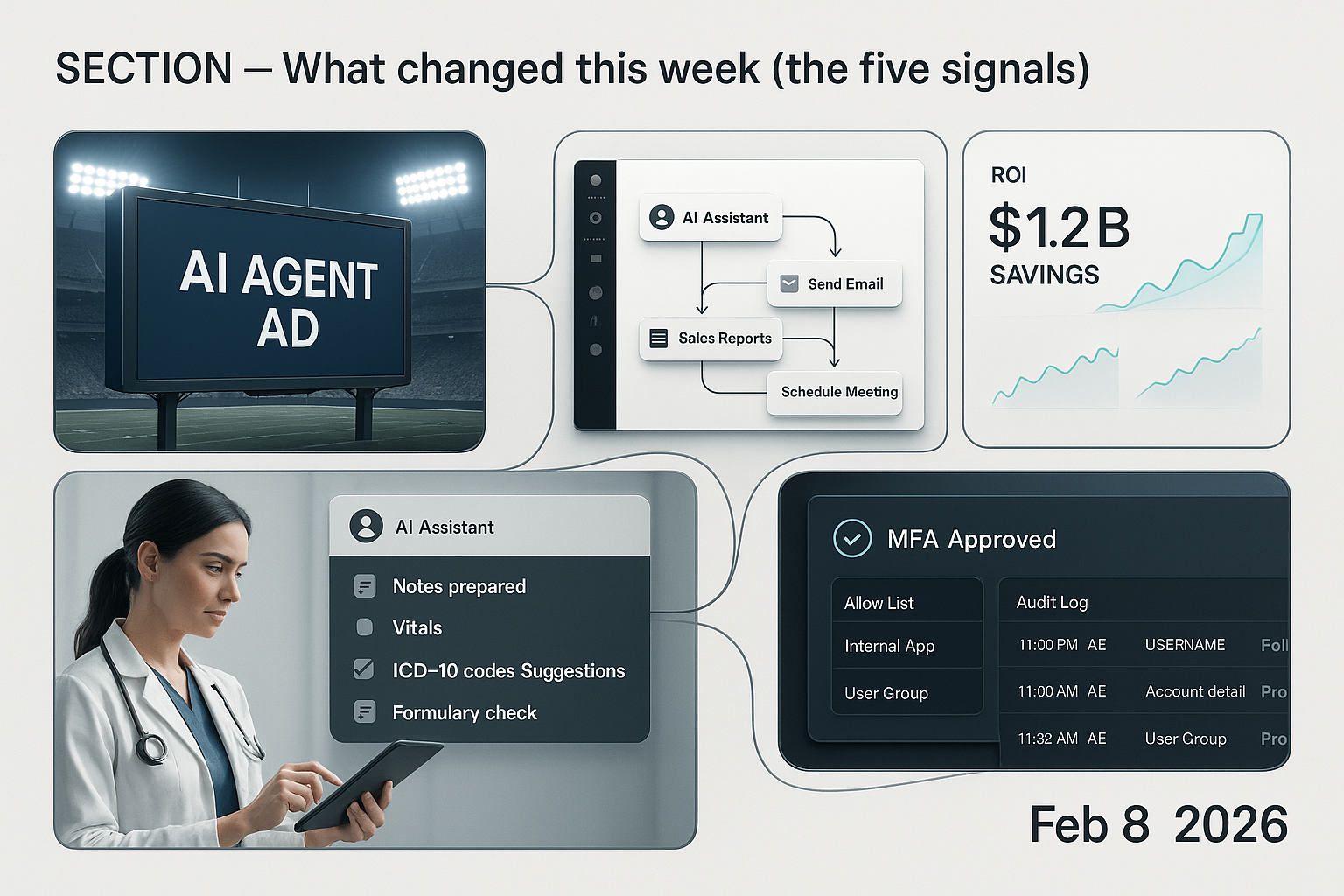
AI.com is headed to the Super Bowl stage (Feb 8, 2026)
Ad Age reported that AI.com will run a Super Bowl ad for an agentic platform. That is the moment a niche dev idea becomes dinner table talk. For me, it signals a wave of consumer-friendly agents that do real tasks across calendars, inboxes, and forms while I’m doing something else.
I treat this as the moment a niche dev idea becomes dinner table talk; I expect consumer-friendly agents to do real tasks across calendars, inboxes, and forms while I’m doing something else.
UiPath buys WorkFusion to go agentic (Feb 8, 2026)
Insider Monkey covered UiPath acquiring WorkFusion to strengthen its agentic AI portfolio. Translation in my head: the old RPA world is turning into semi-autonomous teammates that can reason, fetch context, and act across systems with guardrails. This is the back office getting a real brain.
My approach here is simple. I keep deterministic steps for data movement and validation, and I use agentic reasoning only where judgment helps most like triage, classification, summarization, routing, or exception handling. That split keeps costs and errors down while still feeling like magic.
Forethought customers cross $1B in ROI claims (Feb 8, 2026)
Pulse 2.0 reported Forethought customers topping $1B in ROI with agentic CX. Methodologies aside, I read this as proof that support is the wedge. It is structured enough to automate and messy enough to reward good routing, verification, and close-the-loop reporting.
I treat this as proof that support is the wedge. I focus on support because it is structured enough to automate and messy enough to reward good routing, verification, and close-the-loop reporting.
Healthcare is going from generative to agentic (Feb 8, 2026)
HLTH highlighted a shift toward agentic workflows in healthcare on Feb 8, 2026. That matters because safety, privacy, and traceability all collide here. The picture in my head is a tireless medical scribe plus checklist enforcer that reviews vitals, pulls prior notes, suggests ICD hints, checks formulary, and tees up follow-ups while keeping a human in the loop.
Fraud is the shadow side we need to plan for (Feb 8, 2026)
The AI Journal flagged rising agentic AI fraud risks on Feb 8, 2026. This is where I get picky about controls. Any agent that touches identity or money needs visible brakes I can audit later. Here are the guardrails I personally use and insist on:
- Require multi-factor approval and a written audit trail before any transfer is initiated
- Use tight allowlists for vendors, amounts, and destinations the agent can touch
- Log every tool call with inputs and outputs, then red-team automations quarterly
I insist on strong brakes: I require multi-factor approval with a written audit trail, keep tight allowlists, and log every tool call with regular red-teaming.
How I’d get started this weekend
Pick one small workflow that annoys you
I like weekly update prep. I pull last week’s tickets, summarize themes, list risks, and draft talking points. Keep the scope tiny so you can actually finish it.
I keep the scope tiny so I can actually finish it.
Choose a stack that won’t fight you
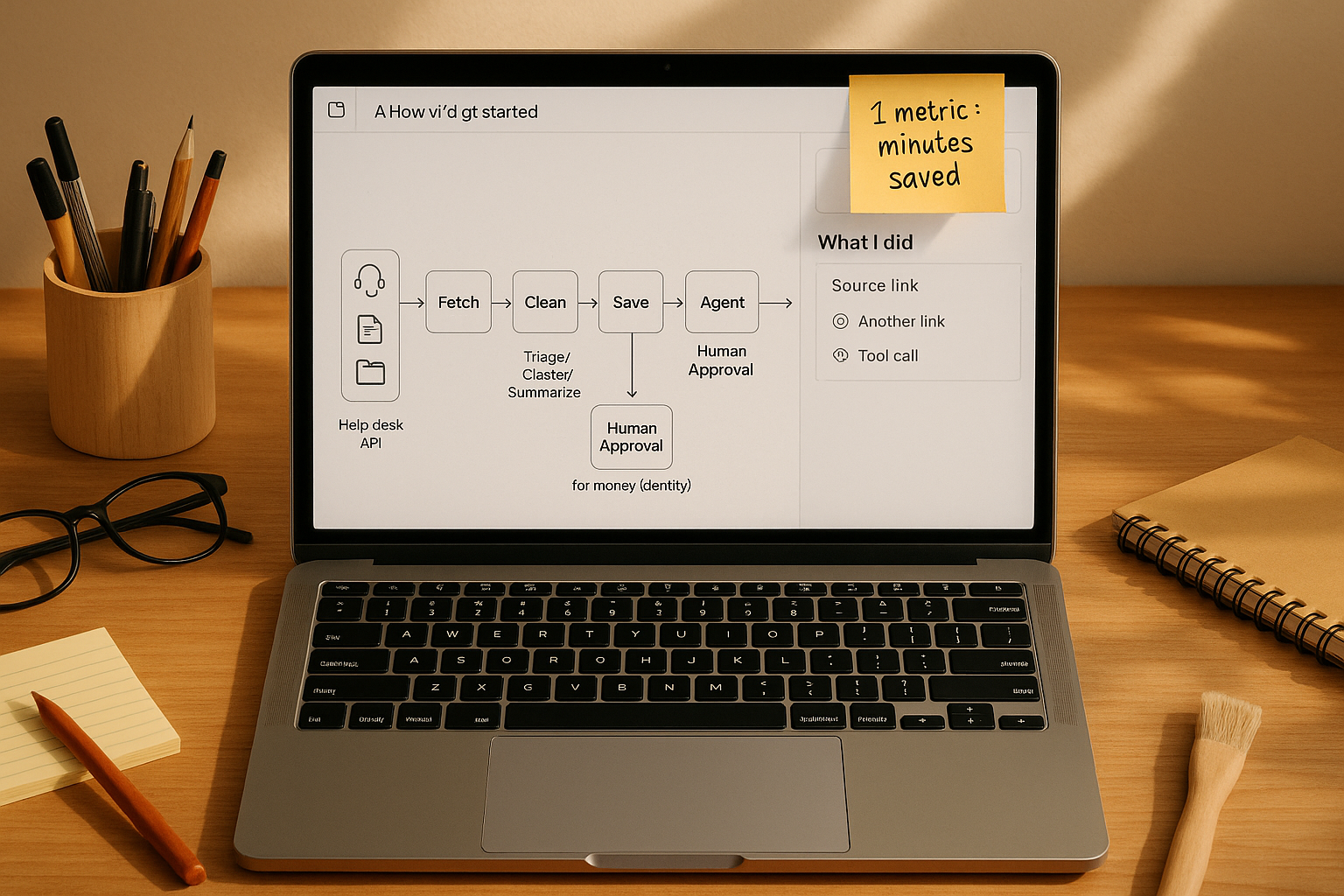
I start with a low-code automator that plays nicely with APIs and web apps, then add an LLM with tool use or function calling. Keep data sources simple like a help desk API, a Google Sheet, or a shared drive. You do not need a vector database on day one.
Start deterministic, then sprinkle agentic
Automate the easy stuff first like fetching, cleaning, and saving data. When that’s reliable, add a small agent to triage, cluster, or summarize with citations. This order prevents blaming the model for pipeline problems.
Make the agent show its work
Every output should include a short What I did section with links to sources or tool calls. If the workflow touches money or identity, require a human click before anything changes in the real world.
Measure one outcome that matters
Pick a single metric like minutes saved per week, response time reduction, or errors avoided. I write it on a sticky note and revisit it after a few runs to see if the agent actually helped.
Why this changed my 2026 plan
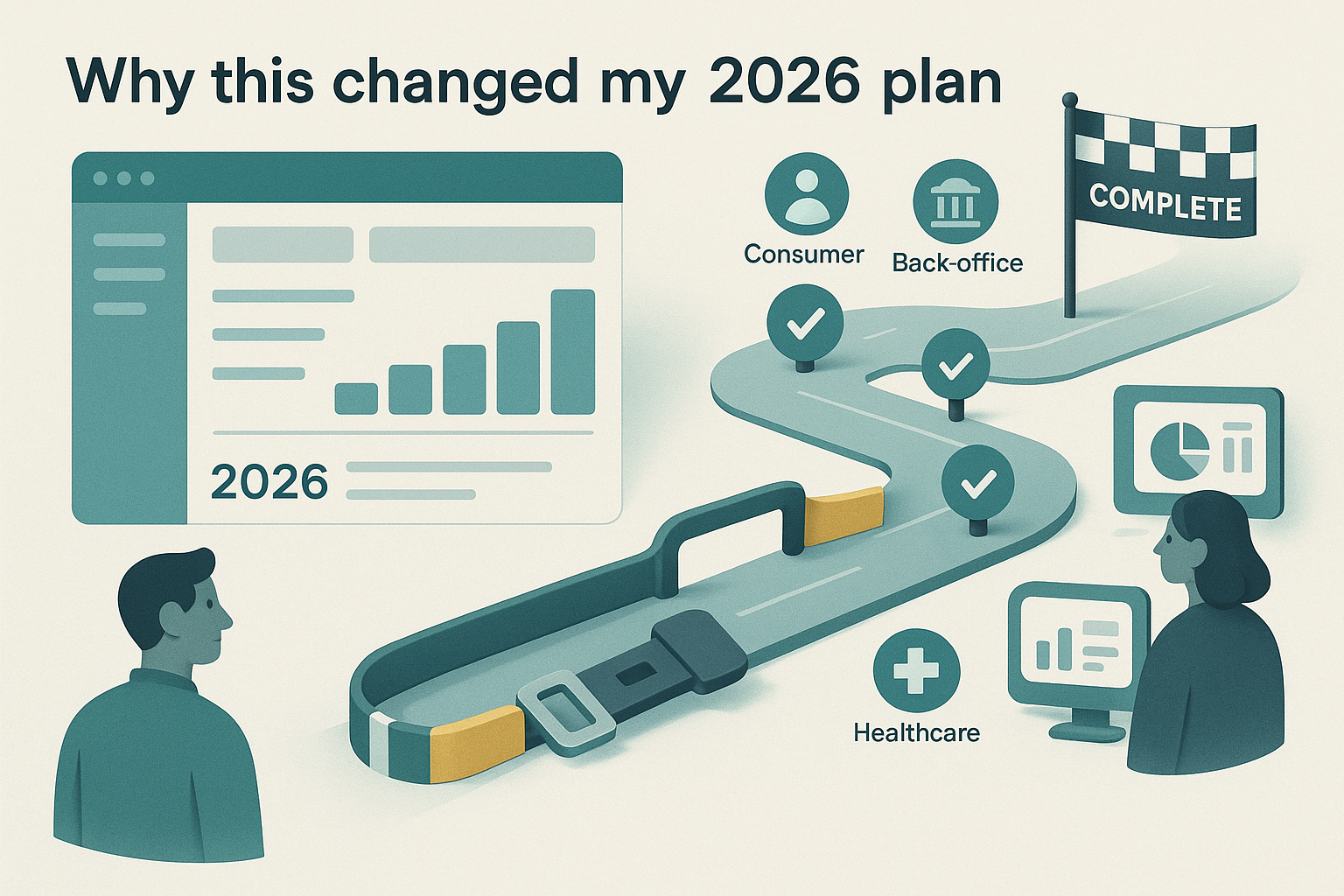
The Super Bowl ad tells me agentic AI is about to meet consumers where they live. UiPath’s move says enterprise workflows are getting an intelligence upgrade. Forethought’s ROI claim shows value beyond demos. Healthcare leaning agentic signals maturity in high-stakes contexts. The fraud warning reminds me to build with brakes, not just gas.
My bet for 2026 is simple: small, boring workflows that finish end to end, wrapped in guardrails that make stakeholders relax. If you ship something tiny but complete this week, you’ll be right on time for what’s clearly arriving.
FAQ
What is agentic AI in simple terms?
Agentic AI is software that can plan and take multi-step actions across tools to finish a task, not just chat. It can decide what to do next, call the right API, verify results, and report back with an audit trail. Think of it as an assistant that follows through.
How can I start with agentic AI if I’m not technical?
Use a low-code automation tool for the plumbing and add an LLM only where judgment helps. Keep your first project tiny, like summarizing weekly tickets with citations. Make it show its work and require approval anywhere money or identity is involved.
Where is agentic AI delivering ROI right now?
Customer support and back-office ops are leading. On Feb 8, 2026, Forethought highlighted over $1B in ROI claims tied to agentic CX and UiPath doubled down on agentic automation. The pattern is consistent workflows with clear data and repeatable decisions.
How do I keep agents safe from fraud or misuse?
Enforce approvals for sensitive actions, keep tight allowlists, and log every tool call with inputs and outputs. Review those logs regularly and red-team your automations. If you can explain what the agent did, when, and why, you’re on the right track.
If you want me to share a scrubbed version of my weekly update agent, ping me and I’ll post a cloneable template.
If you want a scrubbed version of my weekly update agent, ping me and I’ll share a cloneable template.