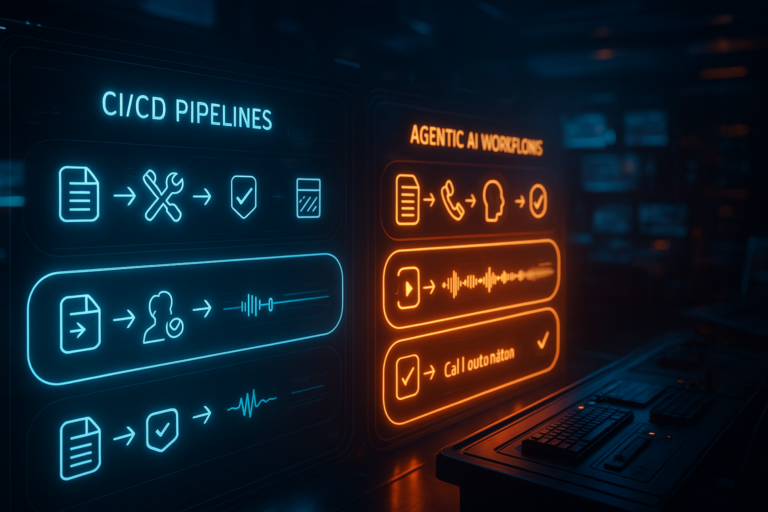


Agentic AI just crossed from hype to shipped work on February 13, 2026. I woke up to headlines across government, DevOps, speed, compliance, and data that pushed me from coffee to commits.
Quick answer: If you’re new to agentic AI, copy these five moves now: scope one boring weekly workflow with one tool and one human check, let an agent babysit your CI/CD, make retrieval fast and measured near 200 ms, wrap actions with logs and oversight, and fix the single data field your agent will touch first.
I start by scoping one boring weekly workflow with one tool and one human check. Then I wrap actions with logs and keep retrieval near 200 ms.
Agentic AI just showed its hand
I’ve been building agents for a while, but February 13, 2026 felt different. A government shop signaled real rollout, DevOps added an agent to the CI loop, and infra speed finally felt native. That combo changes how beginners can safely start and actually ship.
Government move: State Department is rolling out agentic AI
FedScoop reported on Feb 13, 2026 that the U.S. State Department is gearing up to roll out agentic AI. That’s not a lab demo. That’s a green light for mission threads with real stakes, guardrails, and deadlines.
Why this matters
Big orgs only move when risk, ROI, and oversight line up. If they’re moving, it means the pattern is clear: human-in-the-loop approvals, auditable transcripts, and tight permission scopes. You can apply the same playbook at tiny scale.
I always keep human-in-the-loop approvals, auditable transcripts, and tight permission scopes.
How I’m copying it
I picked one weekly mission thread: triage inbound emails into the right Notion database, then kick a Zendesk macro. The agent gets a precise goal, a tiny tool belt, and a crisp definition of done. One human approval, full transcript, and we’re live.
DevOps got an agent: continuous AI in CI/CD
The New Stack covered GitHub’s Agentic Workflows on Feb 13, 2026, which lets agents join your CI/CD loop to open issues, draft tests, propose patches, and shepherd PRs through defined gates.
Why this matters
Your first agent doesn’t need to build features. It can babysit your repo. I’ve got one watching for flaky tests, posting minimal repros, and tagging the right owner. It’s junior-dev work that scales.
My first agent just babysits the repo by watching for flaky tests, posting minimal repros, and tagging the right owner.
How I’m copying it
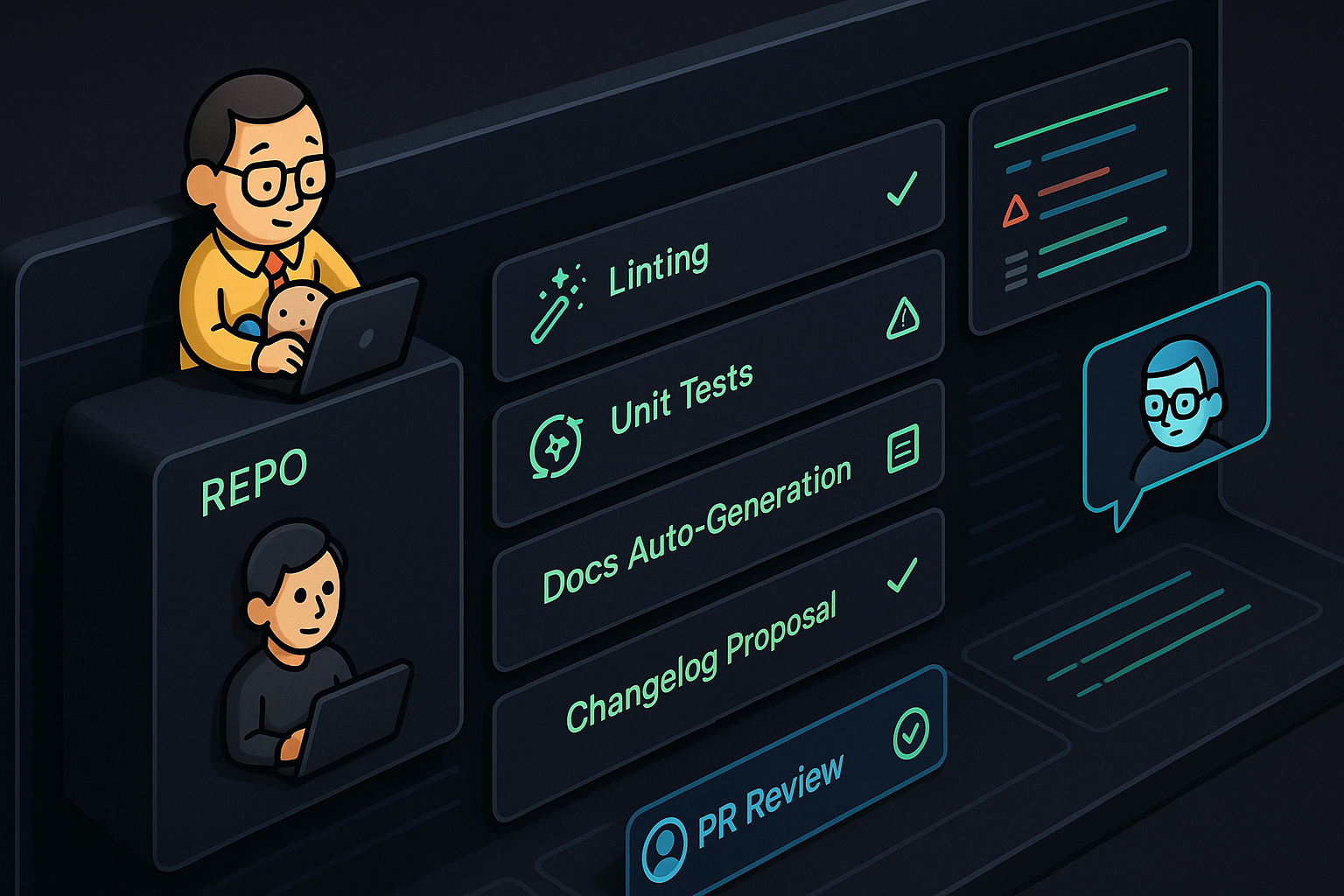
I require one human approval and one agent approval on protected branches. The agent runs linters, regenerates docs from comments, and proposes a changelog entry. Permissions stay tight: read to code, write to issues, and PR comments only. Small gains stack fast when every PR lands a bit cleaner.

Speed tipping point: sub-200 ms retrieval feels native
MarkTechPost highlighted Exa Instant on Feb 13, 2026 with sub-200 ms neural search. Low-latency retrieval is oxygen for agent loops that fetch context multiple times per task.
Why this matters
Agents don’t just need models. They need fast, accurate memory. Slow or noisy search means stalls, retries, and timeouts. Under 200 ms makes real-time handoffs feel natural instead of bolted on.
How I’m copying it
Whatever stack you use, treat retrieval like a product:
- Cache aggressively. If your agent reuses the same 20 docs, prefetch them.
- Track retrieval precision. Log which chunks it actually used to finish the task.
- Fail fast. If search is weak, prompt a clarifying question instead of guessing.
I also wire latency and hit-rate metrics from day one. When loops run under a second, adoption jumps.
I wire latency and hit-rate metrics from day one so loops stay under a second and adoption jumps.
Reality check on rules: the EU AI Act is staring at agents
On Feb 13, 2026, Lexology’s analysis put a spotlight on how the EU AI Act 2024 frames agentic systems. If an agent takes actions, touches personal data, or drives decisions, expect requirements for risk management, human oversight, logging, and transparency.
Why this matters
Good compliance is good engineering. If an agent can send emails, move money, or edit records, I want a replayable timeline of exactly what happened and why. That’s my rollback plan when something goes sideways.
How I’m copying it
Every agent gets a black box: timestamped prompts, tool calls, inputs, outputs, and approvals. I mask PII at the edge and keep a big red stop button that cancels pending actions. I also keep a short capabilities card in the README so scope stays crystal clear.
I give every agent a black box with timestamped prompts, tool calls, and approvals, and I keep a big red stop button to cancel pending actions.
The unsexy truth: bad data will kill your agent
Also on Feb 13, 2026, The Financial Brand bluntly warned that AI strategies fail without fixing data quality first. Agents amplify quirks. If names are inconsistent or tickets are mislabeled, you can automate the wrong outcome at scale.
Why this matters
I learned this the hard way when a prototype split a single queue by tagging issues as billing and billing-issue. Same intent, double the mess.
How I’m copying it
I pick one golden field and lock it down. Normalize, validate, document. If I’m using a vector DB, I re-embed on content change and deprecate stale chunks. Boring data chores unlock exciting agent behavior.

My starter kit for a first agent this weekend
Here’s my clean start: choose one weekly task you hate in email, docs, or tickets and write one paragraph that defines done. Give the agent read access to the source and a single safe action like drafting a reply or filing an issue. Add fast retrieval and cache the top references. Require human approval before any outbound or irreversible action and keep a full transcript. Track latency, completion rate, and human overrides, then fix the top failure reason first.
What I’m shipping next
The GitHub news flipped a switch for me. I’m moving a doc-generation agent into CI so every merge updates product docs, posts a diff in Slack, and opens a follow-up task if comments look thin. With sub-200 ms retrieval, the loop feels native. With a thin compliance wrapper, I can show exactly what it did later.
If you’re just starting, steal my mantra: one task, one tool, one human check, one log. Then ship it. When that feels boring, add the next capability.
FAQ
What is agentic AI in simple terms?
Agentic AI doesn’t just answer questions. It plans subgoals, calls tools and APIs, checks its work, and keeps going until it finishes a defined job. Think of it like a process-following intern that uses your apps and reports back with results.
How do I add guardrails without slowing everything down?
Scope the agent tightly, whitelist tools and permissions, and require one human approval before outbound or irreversible actions. Keep full transcripts so you can audit fast. This adds minutes upfront and saves hours of cleanup later.
Do I really need sub-200 ms retrieval?
You don’t need it to start, but speed compounds. Under 200 ms makes multi-step loops feel responsive, which keeps humans in the flow. If you can’t hit that yet, cache heavy and measure retrieval quality so the agent stays accurate.
What’s the safest first task to automate?
Pick a boring, rules-based workflow you already do weekly, like email triage or drafting ticket replies. Let the agent produce drafts and require a quick approval. Once accuracy holds steady, grant it small autonomous steps.
How do I stay compliant if I don’t ship in the EU?
EU AI Act practices are becoming global best practice. Build in risk assessment, human oversight, logging, and transparency from day one. Even if you never sell in the EU, these habits make agents safer and easier to debug.