

Agentic AI for beginners finally clicked for me this week. I watched a bunch of credible moves land on Feb 13 and Feb 14, 2026, and it changed how I think about getting started without breaking anything important.
Quick answer
If you’re new, start tiny and make it auditable. Pick one low-risk workflow, give the agent read-only access, log every step, and keep human approval on external actions until you trust the output. The best starter moves right now live inside tools you already use, with simple rules and clear boundaries you can explain to a friend.
My tip: I start tiny and make it auditable. I keep read-only access and human approval on external actions until I trust the output.
GitHub just made agentic workflows feel real
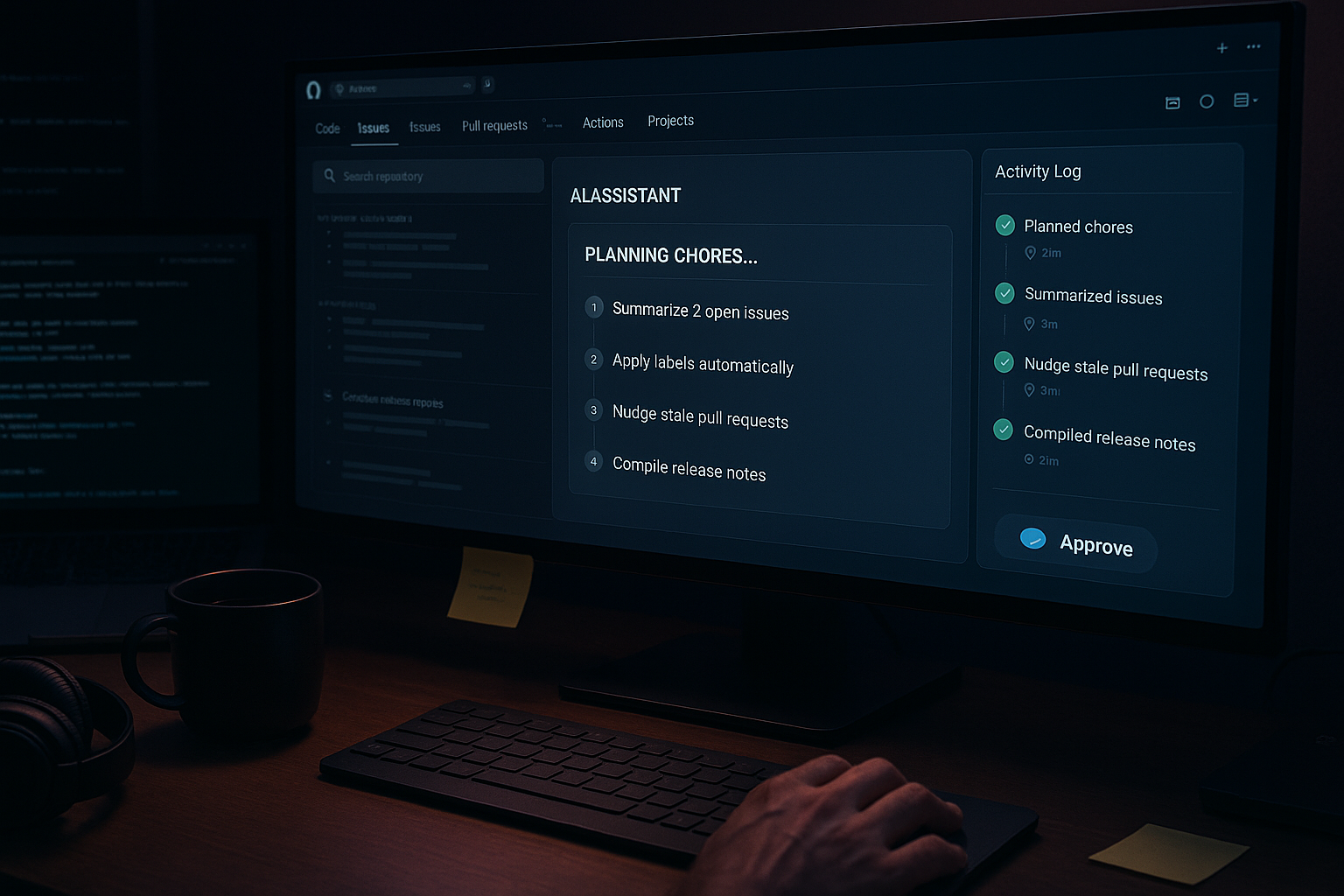
On Feb 13, 2026, GitHub published a guide on automating repository tasks with Agentic Workflows. For me, this was the first mainstream signal that agents are treated like normal CI neighbors, not lab experiments. The pitch is simple: let an AI plan and sequence repo chores like issue triage, release notes, and nudging stale PRs, inside your rules. You can read the announcement here.
How I’d start
I’d spin up a tiny practice repo and scope one task: summarize new issues daily and add tags. Keep logs on, approve changes manually, and review drift weekly. The goal isn’t flash. It’s building trust.
I keep logs on, approve changes manually, and review drift weekly. The goal for me is building trust, not flash.
Government-scale adoption is coming
Also on Feb 13, 2026, FedScoop reported the US State Department is gearing up to roll out agentic AI. That shifts the conversation from if to how, which usually brings better guardrails, auditability, and clearer human-in-the-loop paths. The article is here.
What I’m taking from this
If agencies are formalizing patterns, those patterns will show up in vendor tools. I’m practicing the boring parts now: what data the agent can touch, what gets logged, and what needs my approval.
I practice the boring parts first: define what data the agent can touch, what gets logged, and what needs my approval.
Hospitals are asking for true agents, not point tools
Healthcare IT News said on Feb 13, 2026 that hospitals should move from task-based tools to intelligent, agentic systems that coordinate multi-step workflows. That tells me orchestration is winning over one-off scripts. Even if you’re not in healthcare, the lesson is universal: define the goal, set boundaries, let the agent plan with oversight.
My starter workflow outside healthcare
I like lead intake as a test bed: collect new form entries, enrich with public data, draft a summary, then prep a CRM record. The agent asks me to approve the final write for the first week. Same orchestration pattern, safer stakes.
Governance just got practical
On Feb 14, 2026, Palo Alto Networks released a guide that explicitly tackles agent permissions, tools, data boundaries, and incident response for AI-driven actions. It’s not about slowing you down. It’s about preventing silent drift into risky territory. You can skim it here.
My rule of thumb: clear permissions and boundaries speed you up because they prevent silent drift into risky territory.
The lightweight checklist I actually use
- Scope one task per agent until it proves itself
- Read-only by default, upgrade access after review
- Redact personal data in logs, keep summaries not dumps
- Human approval on external actions for the first 50 runs
- Fallback to me if confidence is low or an API fails
Business schools are training operators
On Feb 14, 2026, the Daily Bruin covered UCLA management students learning agentic AI. That matters because winners pair builders with operators who can map processes, define success, and manage change. If you’re non-technical, you’re not late. You might even be early.
If you’re non-technical, you’re not late; mapping processes and defining success can make you early.
My 7-day starter plan
I keep this simple. Day 1, write a five-sentence problem statement for one annoying task. Day 2, create a sandbox or dummy data. Day 3, set up one agentic workflow in a tool I already use. Day 4, turn on step-by-step logging. Days 5 to 6, run 10 supervised trials and tighten rules. Day 7, give the lowest-risk step limited autonomy and keep the rest supervised.

FAQ
What is agentic AI in plain English?
It’s AI that plans and takes multi-step actions toward a goal, not just answers one prompt. It decides what to do next inside rules you set, asks for help when needed, and logs what happened so you can review it.
Do I need to code to start?
No. Coding helps, but you can begin in tools you already use. Focus on clearly mapping the workflow, setting permissions, and defining the success criteria. The clarity matters more than the syntax.
What should beginners automate first?
Pick something repetitive, low-risk, and observable. Examples I like: issue summaries with tags, inbox triage with labels, or drafting notes from meeting transcripts. Keep write actions behind approval until you trust the results.
How do I keep it safe and compliant?
Limit access, log every step, and require approval on anything external for the first 50 runs. Redact sensitive data in logs and review drift weekly. If confidence is low or an API fails, escalate to you by default.
How fast can I see real value?
If you scope tightly, you can see time savings in a week. The bigger win shows up in week two or three when you widen access on the most reliable step and stop approving the same good outcome over and over.
My take
This week made agentic AI feel practical. GitHub is normalizing agents for developers, the State Department is pushing for responsible adoption, hospitals want orchestration over point tools, and security teams are writing playbooks that actually mention agents. Start small, log everything, and keep a human in the loop until you’re bored of approving good work. Then give it a little more room.