

Agentic AI finally clicked for me this week. I tried to downplay it, then March 15, 2026 landed like a sledgehammer and I couldn’t unsee it.
Quick answer: Agentic AI is moving from chat to do, and the signals all arrived on March 15, 2026. Nvidia GTC teed up enterprise agents, Morgan Stanley floated a $139B market, and DataRobot tightened into NVIDIA’s stack. Add Intuit openly embracing human-in-the-loop and the path is clear: build tiny agents with approvals, logging, and two tools. Start now.
My shortcut: I build tiny agents with approvals, logging, and exactly two tools, and I start now.
The Enterprise Shift I Felt At Nvidia GTC
On March 15, 2026, The Register previewed GTC as an agentic AI hype fest. The vibe shift was obvious to me. Last year we obsessed over chat. This year is pipelines, tools, state, and guardrails so agents can actually complete tasks.
GTC usually sets the shopping list for IT leaders. If the keynote is shouting agents, your inbox will soon whisper POC. That’s why I stopped pretending this was optional.
When the keynote shouts agents, I expect POCs in my inbox, so I stop pretending it’s optional.
Why it matters if you’re starting from zero
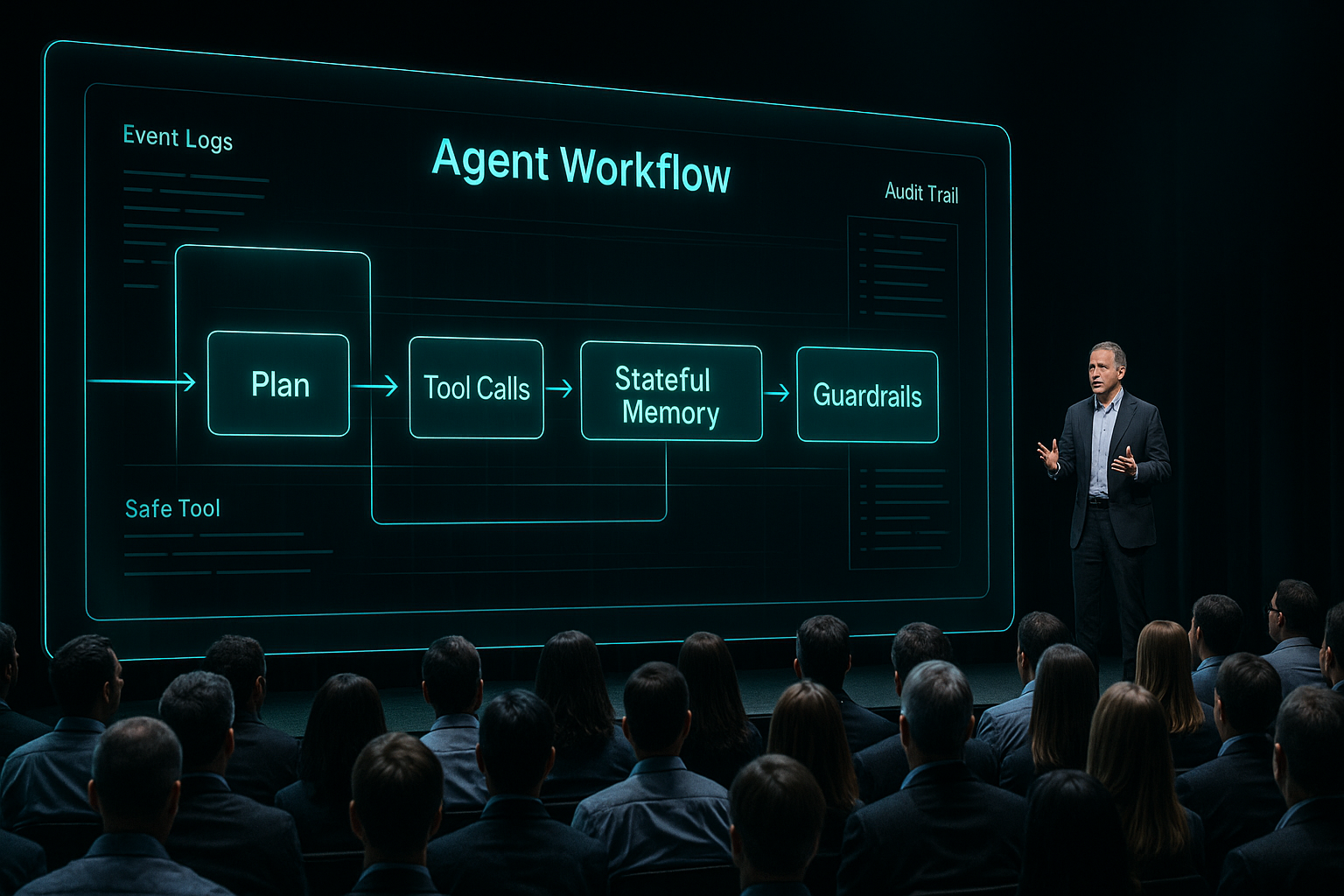
When enterprises pile in, the docs, SDKs, and patterns get friendlier. You don’t need to invent planning or memory from scratch anymore. The agent stack is getting opinionated in good ways: orchestration, event logs, stateful memory, and safe tool adapters. Copy the patterns, then customize.
Follow The Money: A $139B Agentic AI Market
Also on March 15, 2026, Bitcoin.com News covered Morgan Stanley calling AI a macro force and pegging agentic AI at $139B. I don’t worship any single number, but big banks do not float that figure unless budgets and procurement talks are already warming up.
I don’t chase a single number, but when a big bank floats $139B I assume budgets and procurement are already heating up.
Macro means it hits everyone, not just tech. If you’re in ops, support, marketing, or IT, there’s probably a boring 80 percent of a process an agent can prep so you can approve the last mile.
What Scale Looks Like: DataRobot + NVIDIA
Same day, March 15, 2026, TipRanks reported DataRobot tightening with NVIDIA to scale agentic workflows. Translation in my head: Fortune 500 customers want agents that call real tools, run under governance, and plug into GPU-friendly components without duct tape.
Here’s what I’m optimizing for now:
- Clean tool calling with state tracking so agents don’t wander.
- GPU-aware retrieval and vector search because context is still finite.
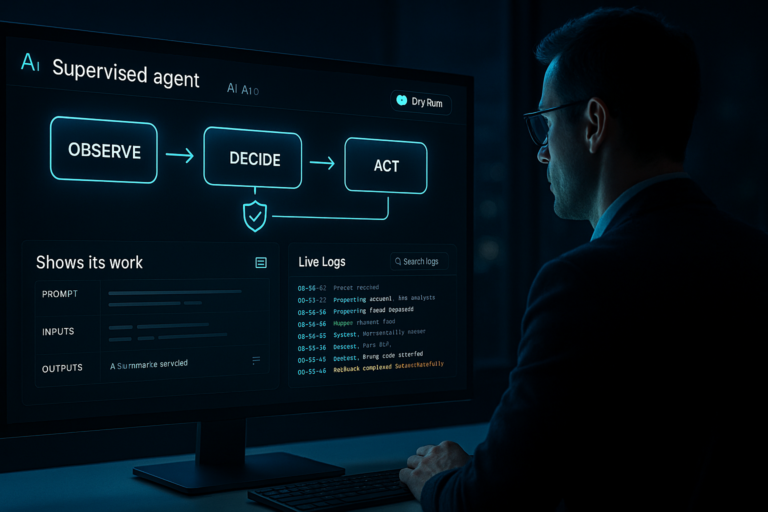
- Observability by default: logs, replays, cost tracking, and human approvals.

You don’t need DataRobot to think like this. Even if you’re scrappy, design for state, tools, and safety first.
Even if I’m scrappy, I design for state, tools, and safety first.
The Human-In-The-Loop Comeback
Also on March 15, 2026, Intuit’s flagship store news popped up, blending AI with real experts. I love this because it abandons the fully autonomous fantasy in favor of what works now. Let the agent prep, fetch, and draft. Let me approve, nuance, and escalate. It feels magical without risking a thousand-dollar mistake.
I won’t let an AI click buttons in my business unsupervised. But can it clear 80 percent of the grunt work so I make the final call? Absolutely. Approvals are a feature.
I treat approvals as a feature so the agent clears the grunt work and I make the final call.
How I’d Start This Week
I keep it tiny, observable, and useful. If it saves 10 minutes a day, it stays.
Step 1: Pick one real task
Good first picks for me have been daily ticket summaries with action items, a weekly competitor snapshot from public links, or follow-up email drafts with placeholders I personalize. If it burns 20 to 40 minutes, you found a candidate.
Step 2: Choose your agent runtime
If you’re non-technical, use a platform with tool calling and approvals out of the box. If you can code a bit, grab a light orchestration library that treats tools as functions, persists state, and logs everything. Avoid the single-prompt stunt. You want steps.
Step 3: Add exactly two tools
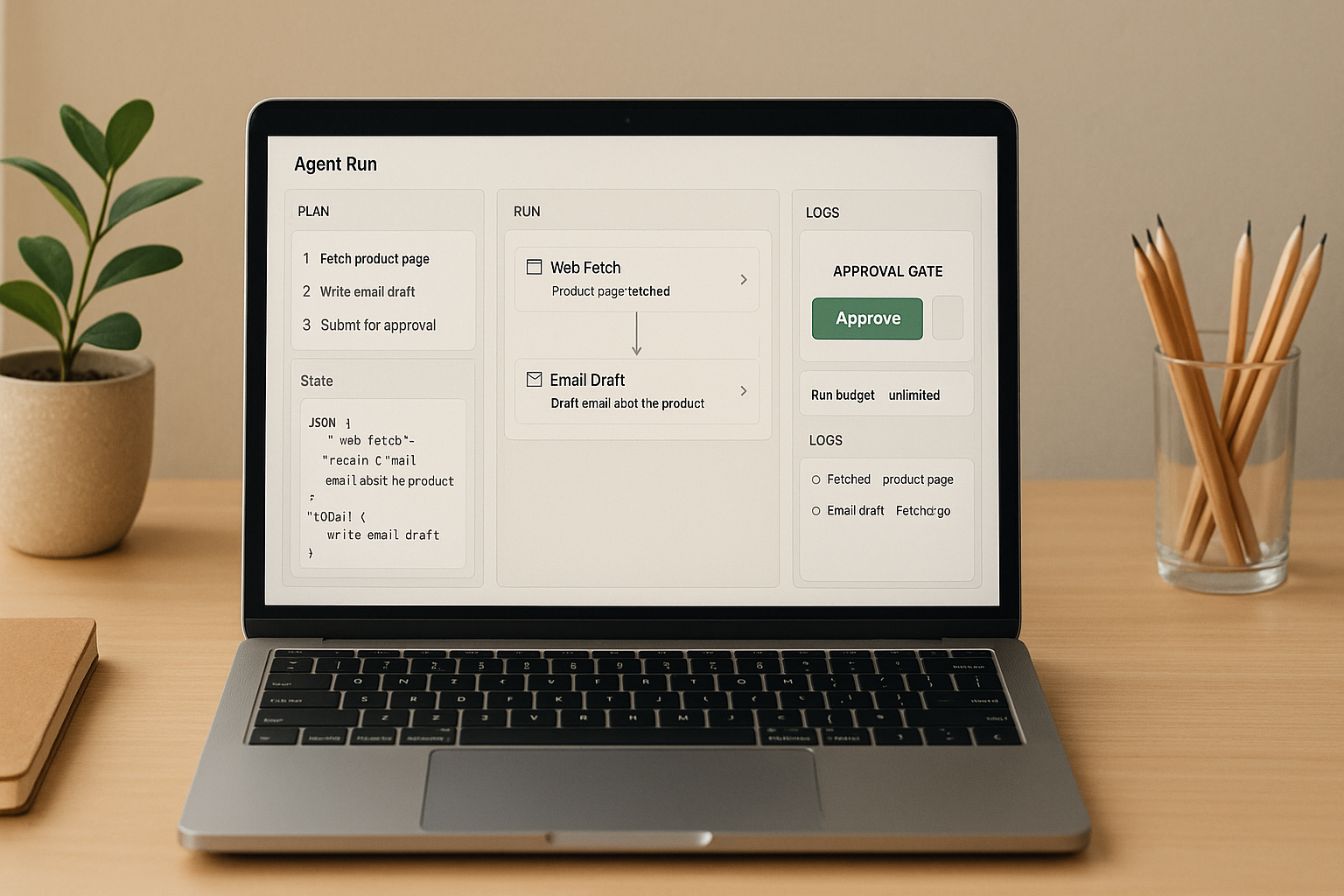
One for browsing or data fetch, one business tool like email draft or calendar write. Two tools force focus. Tie both to a simple approval before anything leaves your account.
Step 4: Make state your superpower
Have the agent remember what it just did. A small JSON record of recent actions, the current goal, and a to-do list is enough to start. Retrieval can come later.
Step 5: Add gentle guardrails
Set a budget per run and require approval for outbound actions. Log every tool call and response. Fix prompts with evidence, not vibes.
My 2-Hour Starter Plan
Hour 1: I write a tiny spec like a checklist for a junior assistant. Goals, inputs, outputs, and what done looks like. I define two tools and a single approval. I wire logs first, even if it’s just console output.
Hour 2: I run three dry tests on old data. I look for patterns before tweaking. Then I adjust prompts and tool schemas once. Last, I do one supervised live run and approve every outbound action. If it saves me time, I keep it. If it confuses me, I cut scope until it’s boring.
What This Week Changed For Me
After the GTC drumbeat on March 15, 2026, I’m prioritizing interoperability so I can swap vector stores or planners without rewrites. After the $139B note, I’m leaning into logging, cost controls, and access policies because that’s what unlocks production in bigger orgs.
The DataRobot and NVIDIA alignment nudged me toward GPU-friendly components for retrieval and reranking. I don’t need a rack of H100s to start, but I want to be future-compatible. And Intuit’s move reminds me to design with a human approval point. If I can’t explain where a human fits, the design is incomplete.
FAQ: Agentic AI, Answered Fast
What is Agentic AI in plain terms?
It’s AI that plans and takes actions with tools to complete a task, not just chat. Think multi-step workflows with memory, tools, and approvals so results are trackable and safe.
Do I need powerful GPUs to start?
No. You can begin with hosted models and light retrieval. As you scale, GPU-aware components help with speed and context, but they are not a blocker for a useful pilot.
How do I keep it safe and compliant?
Use approvals for outbound actions, enforce budgets per run, log every tool call, and store state. Those basics give you auditability and make prompt fixes data-driven.
What’s a great first use case?
Pick something repeatable that eats 20 to 40 minutes daily: ticket triage, weekly research snapshots, or templated follow-ups. Have the agent prep 80 percent, then approve the last mile.
How do I measure success?
Track minutes saved, approval rate, and error rate per run. If time saved is rising and corrections are falling, you’re ready to expand tools or scope.
If You Only Remember One Thing
Agentic AI is not here to replace you. It’s here to replace the parts of your day you never wanted. Build something tiny, make it observable, give it two tools and one approval, then run it. You’ll know in a day if it’s worth keeping.