

Agentic AI finally feels real. Here’s what I’m doing this week
Agentic AI clicked for me this week. I spent a couple days digging through fresh updates and realized this isn’t a hype cycle anymore. Real teams are moving past demos and getting results, and the timing matters.
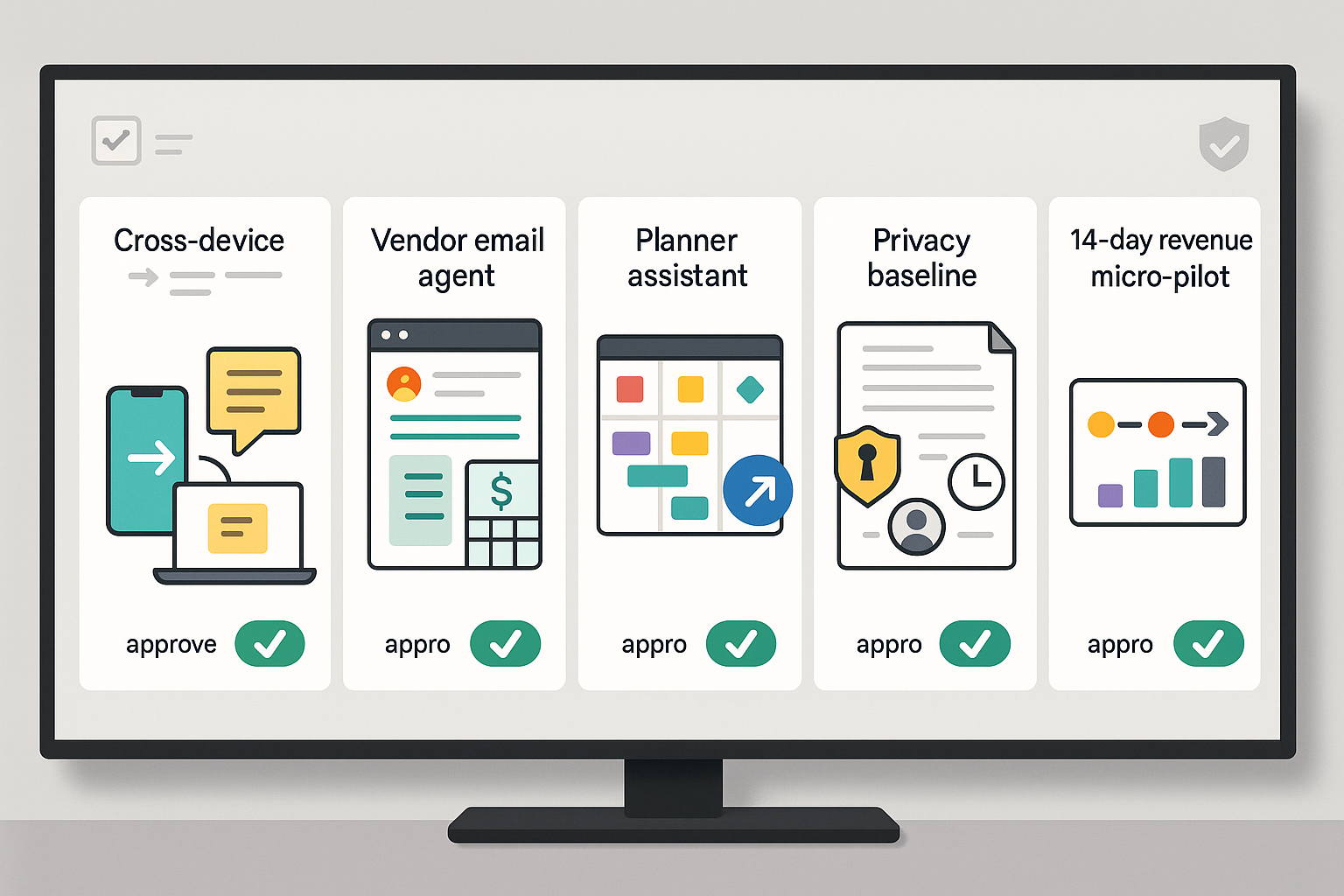
Quick answer: Agentic AI lets an AI plan steps, call tools, and adapt with approvals. I’m shipping five small, safe automations this week: a cross-device reading-to-notes flow, a supervised vendor email agent, a planner assistant for my content pipeline, a simple privacy baseline, and a 14-day revenue pilot. Copy any one of these and you’ll feel the lift fast.
If you copy one of my small, safe automations and ship it with approvals this week, you’ll feel the lift fast.
What “agentic” actually means in plain English
Agentic AI is more than answers. It takes actions toward a goal, calls APIs, checks its work, and asks for help when it’s stuck. Think less chatbot, more reliable intern that follows instructions and uses your tools.
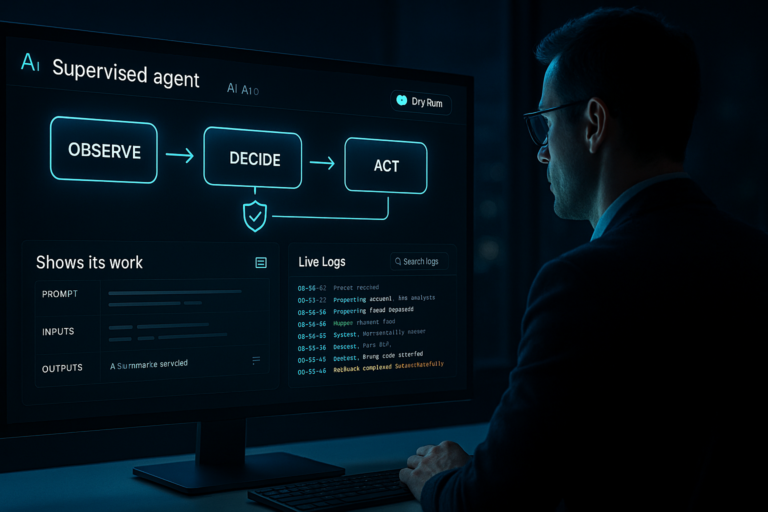
The hard part is balancing autonomy with control. I want speed and initiative, but I also want approvals, guardrails, and logs. That combo is finally mainstream.
I move faster when I balance autonomy with approvals, guardrails, and logs.
Why this week felt like a tipping point
Several updates landed on March 30, 2026 that pushed me over the edge.
Samsung extended agentic AI across devices on March 30, 2026, which makes everyday flows like tab coordination, form fills, and link captures feel seamless between phone and laptop. Cross-device context is what turns an agent from a toy into a teammate.
I treat cross-device context as the unlock that turns an agent from a toy into a teammate.
Daimler Truck North America showed measurable planner productivity gains on the same day. That’s not another dashboard. It’s fewer clicks for complex operations, which lowers the bar for the rest of us.
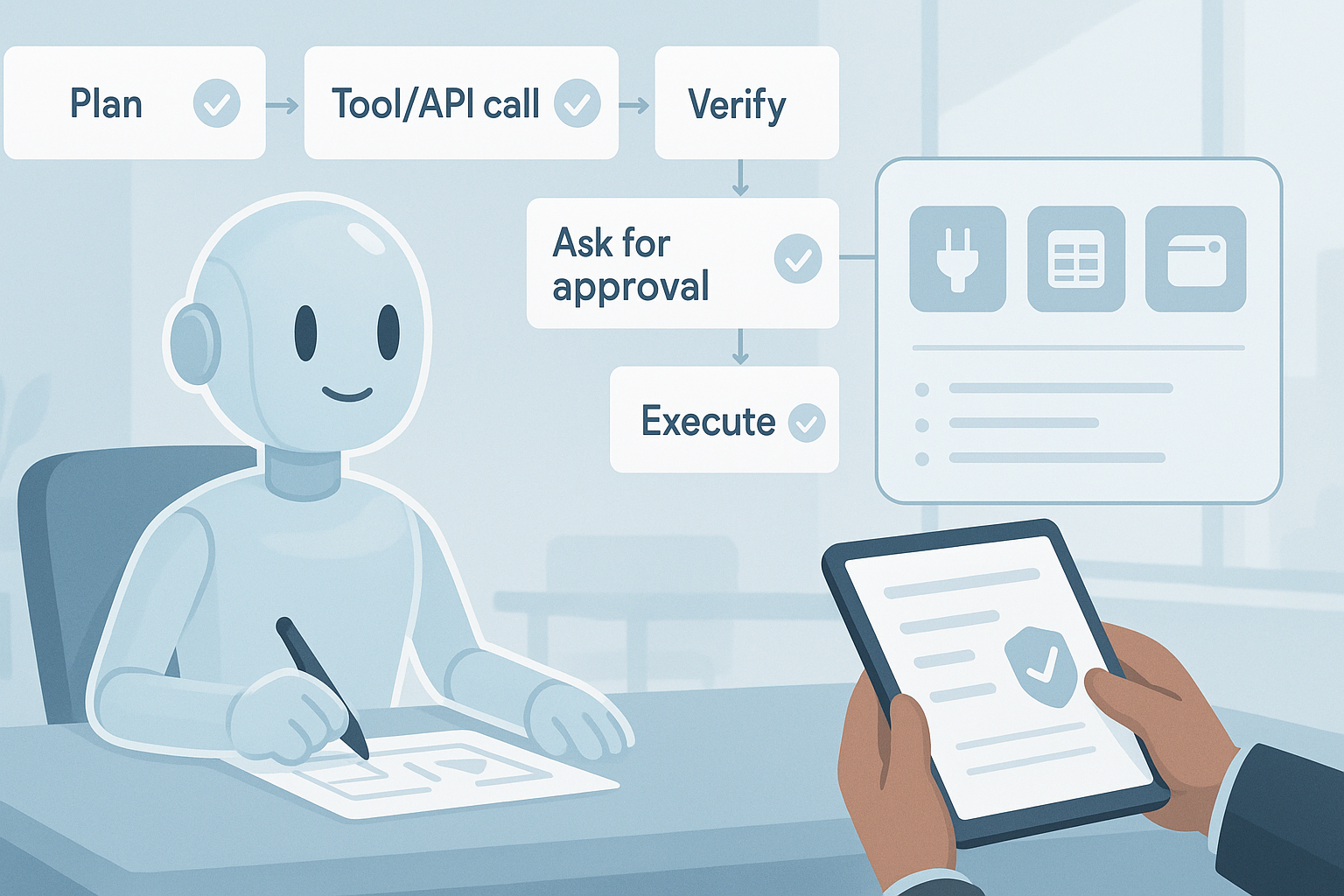
And Microsoft published prescriptive OWASP Top 10 guidance for agentic AI in Copilot Studio on March 30, 2026. Clear mitigations for prompt injection, tool control, output sanitization, and human-in-the-loop finally give me a safe path to ship.
What I’m actually shipping this week
One cross-device workflow I’ll use daily
I’m wiring a flow that starts on my phone and ends on my laptop: save links, auto-summarize into my notes, then create a to-do with one-click approval. Samsung’s cross-device push on March 30, 2026 makes this pattern feel ready for prime time, so I want to live with it and find the rough edges.
A safe, supervised agent for a boring admin task
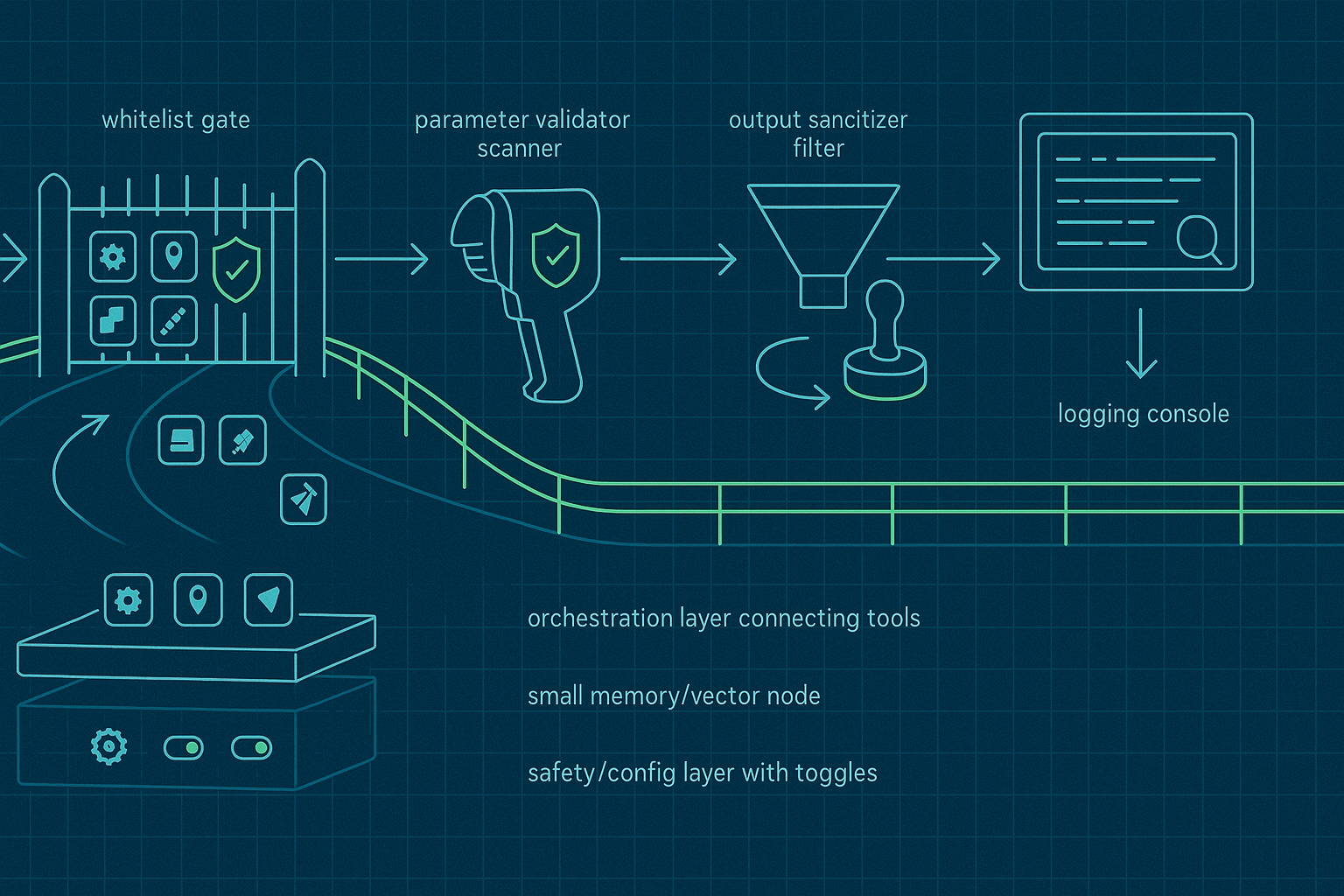
I’m building a tiny agent that drafts vendor emails from a template, grabs the right figures from a sheet, and waits for approval before sending. Tools are whitelisted, inputs sanitized, outputs linted, everything logged. Microsoft’s March 30 guidance is my checklist, not a vibe.
A mini planner assistant that reduces clicks
Inspired by Daimler’s update, I’m testing a planner-style assistant for my content pipeline. It pulls status from three places, flags blockers, and proposes next steps. If it saves five context switches a day, it stays. If not, I kill it.
I keep agents that save at least five context switches a day and kill the rest.
A privacy baseline before I touch customer data
Before any agent sees real user data, I’m writing a one-page standard influenced by league-wide approaches that landed on March 30. I’m keeping it simple and strict: data minimization, role-based access, retention windows, and an opt-out. It’s easier to codify now than retrofit later.
A 14-day micro-pilot tied to revenue
I’m running a two-week pilot on a revenue-adjacent loop: incoming lead triage. The agent enriches a lead, scores it, drafts a tailored reply, and waits for my approval. If response time and conversion improve, I double down. If not, I pivot.
Beginner-friendly starter stack I’d use again
I get asked what to build with. Honestly, anything that ships guardrails and logs quickly will work. If you pushed me for a starting point:
- Safety and structure: Microsoft Copilot Studio, using the March 30 OWASP mapping to set sane defaults fast.
- Flexible orchestration: a framework where tool calls and human approvals are explicit, plus a small vector store for memory.
- Discipline: keep the tool list tiny, add approvals early, and log everything from day one.
The stack isn’t the unlock. Picking one boring workflow and shipping it with approvals is the unlock.
I pick one boring workflow and ship it with approvals, because that’s the real unlock.
How I’m thinking about safety without killing momentum
I’m following three rules that make me comfortable moving fast.
First, assume the model will be tricked eventually. No raw prompts or web content should reach powerful tools without a whitelist and parameter checks. Second, build obvious human stops. Anything that spends money, sends messages, or changes records gets my approval every time. Third, log everything. If I can’t see what happened and why, I turn it off until I can.
Two tiny projects you can ship this weekend
Inbox triage with approvals
Have the agent summarize unread emails twice a day, suggest labels, and draft replies for the top threads. You approve or edit, then it files the rest. It’s familiar, safe, and instantly useful.
Shopping assistant with receipts
Give the agent a budget, a short item list, and three approved stores. It finds options, compares shipping times, and proposes a cart with a line-item summary. You click approve to buy and keep a simple CSV log.
FAQ
What is Agentic AI in simple terms?
It’s AI that takes steps toward a goal, not just answers. It can plan, call tools or APIs, verify results, and pause for your approval on sensitive actions. Think task runner with supervision, not a chat widget.
How do I keep Agentic AI safe in production?
Start with whitelisted tools, strict parameter validation, output sanitization, and human-in-the-loop approvals for anything risky. Use the OWASP-style checks Microsoft published on March 30, 2026 as a practical baseline.
What’s a good first agentic workflow?
Pick a boring, repetitive task you touch daily. Inbox triage with approvals or a cross-device read-to-notes flow are fast to implement and easy to supervise. Daily contact accelerates learning.
When should I add privacy controls?
Before your agent touches any real user data. Define data minimization, access rules, retention, and opt-out early. It’s far cheaper to set this up now than to retrofit later.
How do I measure ROI quickly?
Run a 14-day micro-pilot on a high-frequency loop. Track response times, error rates, and conversions with human approvals in place. If the metrics move, expand. If not, cut and pivot.
Final thoughts
What changed on March 30, 2026 wasn’t one headline. It was the pattern: cross-device experiences landing, real productivity wins in heavy operations, and a practical safety playbook you can actually follow. I’m shipping five small, supervised automations this week. If any of these help you move from I should learn this to I shipped this, then it was worth writing. Tell me what breaks. That’s where the learning lives.