

Agentic AI just went real this weekend
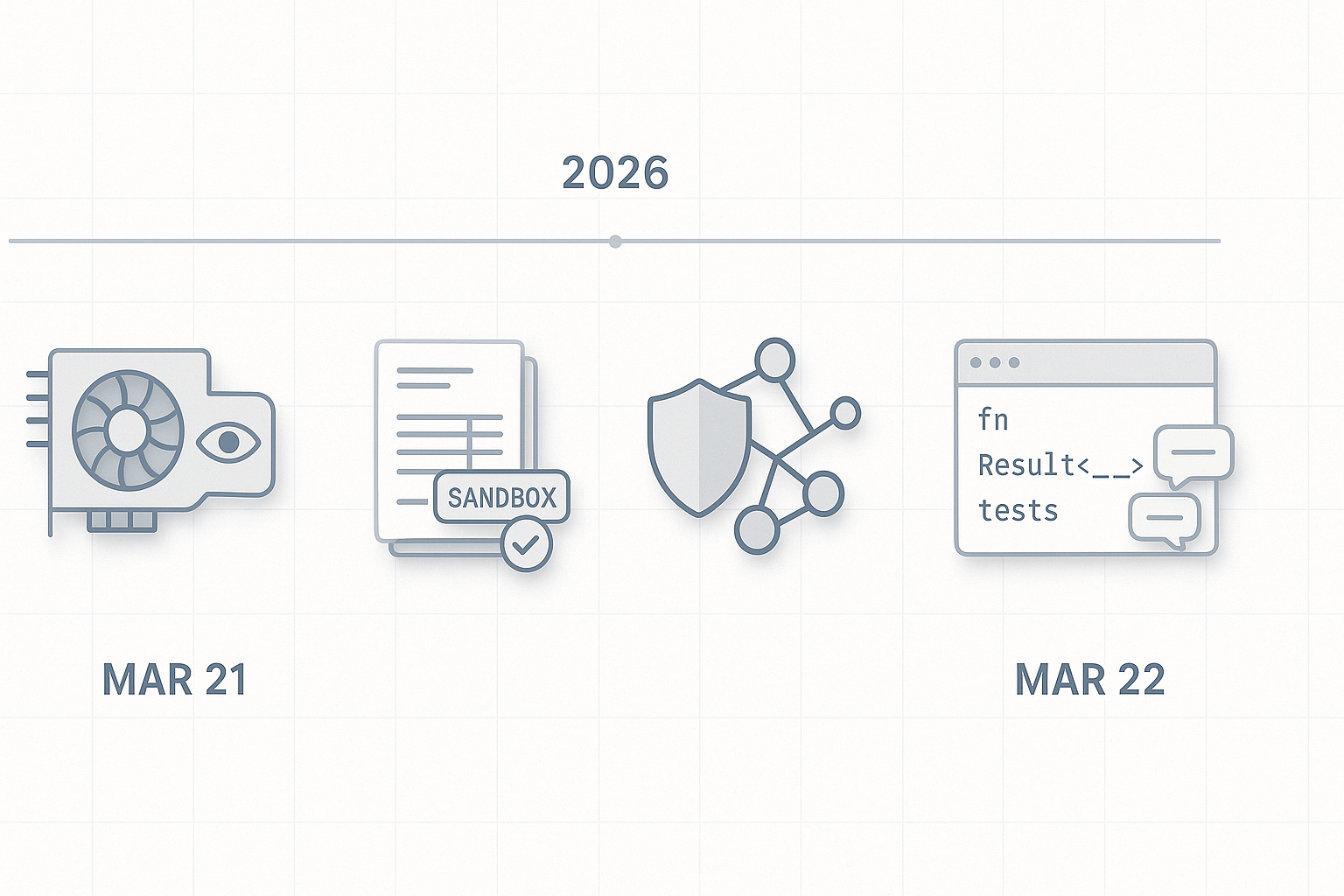
Agentic AI flipped from hype to action for me between March 21 and March 22, 2026. I watched four signals hit at once: Nvidia publicly nudging agents forward, Adobe treating finance like an AI lab, banks pointing agents at real financial crime, and the Linux kernel accepting AI Rust reviews. Here’s exactly how I’m copying the playbook without a research team.
Quick answer: Map one repetitive workflow, let an agent handle three safe, read-only steps like gathering docs, summarizing, and proposing next actions, then add a single act step behind human approval. Keep everything in draft, track minutes saved vs corrections, and only expand scope once suggestions get consistently accepted. Start where you already work, right next to chat.
My quick tip: start by mapping one repetitive workflow, let an agent handle three read-only steps, then add one act step behind approval.
What changed in 48 hours
Nvidia’s nudge: Jensen Huang backs agentic AI
On March 21, 2026, Meyka reported Jensen Huang’s public support for agentic AI with Vera Rubin. I took it as a build signal, not a think piece. When the GPU leader points at agents that can perceive, plan, and act, SDKs and tooling tend to follow.
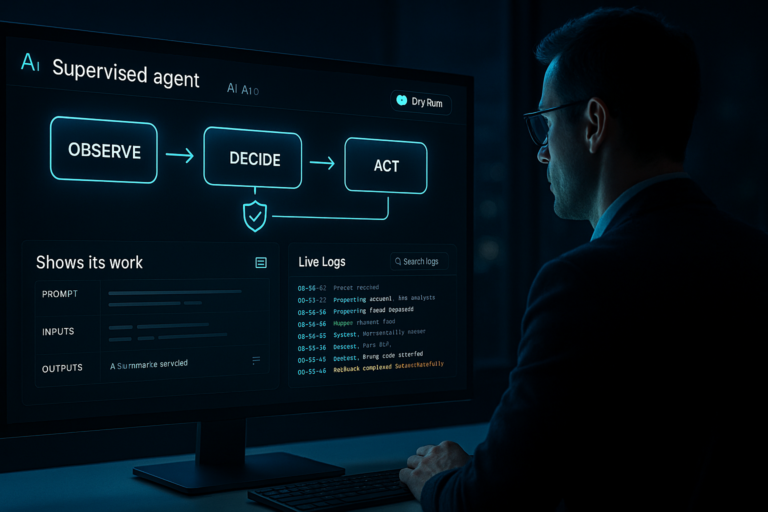
How I’m copying it: I stopped thinking in single chat windows and started sketching flows where one agent calls tools, self-checks, hands off to another agent, then returns a verifiable outcome. Even basic stacks work if the loop is tight.
Adobe’s CFO turned finance into an AI lab
On March 22, 2026, Fortune covered Adobe’s CFO reframing finance as an AI lab. That quietly solves ownership and data access in one move. Finance is stuffed with bounded, rules-heavy work that screams for agents with tool access and clear guardrails.
My starter inside finance-style workflows: pick one doc-heavy process, grant read access to invoices or statements, wire a sandboxed function to draft entries, and have the agent post a proposed action in Slack with a one-click approve or reject. Measure only the hours you didn’t spend.
I keep it simple: pick one doc-heavy process, give read-only access, draft in a sandbox, then ask for a one-click approval in Slack.
Banks are pointing agents at financial crime
On March 22, 2026, a Finextra deep dive unpacked agentic AI in financial crime. The jobs here aren’t fluffy: triage noisy alerts, enrich cases with external data, spot network links, and draft investigator-ready narratives for human sign-off. If it holds up in a regulated stack, it will likely hold up in yours.
I treat every operational alert like AML: pull recent context, summarize anomalies, and propose one next step with a confidence score.
My copyable pattern: treat every operational alert like AML. For refunds, failed payments, or suspicious logins, I spin up a triage agent that pulls recent context, summarizes anomalies in plain English, and proposes one next step with a confidence score. Human approval stays until false positives drop.
Linux kernel Rust code is getting AI reviews
Also on March 22, 2026, Phoronix reported that Sashiko now provides AI review on Rust code for the Linux kernel. That turned my head. Code review is a perfect agentic entry point because the action is suggestion-only, and Rust’s rules make automated reasoning more reliable.
How I mirror it: I run an agent on pull requests with read-only permissions. It enforces style or flags missing tests, posts comments, never commits. Then I quietly track acceptance rates before widening scope.
If you’re brand new, steal my starter stack
I split my setup into lightweight lanes so I could ship before learning a dozen frameworks. You can copy this.
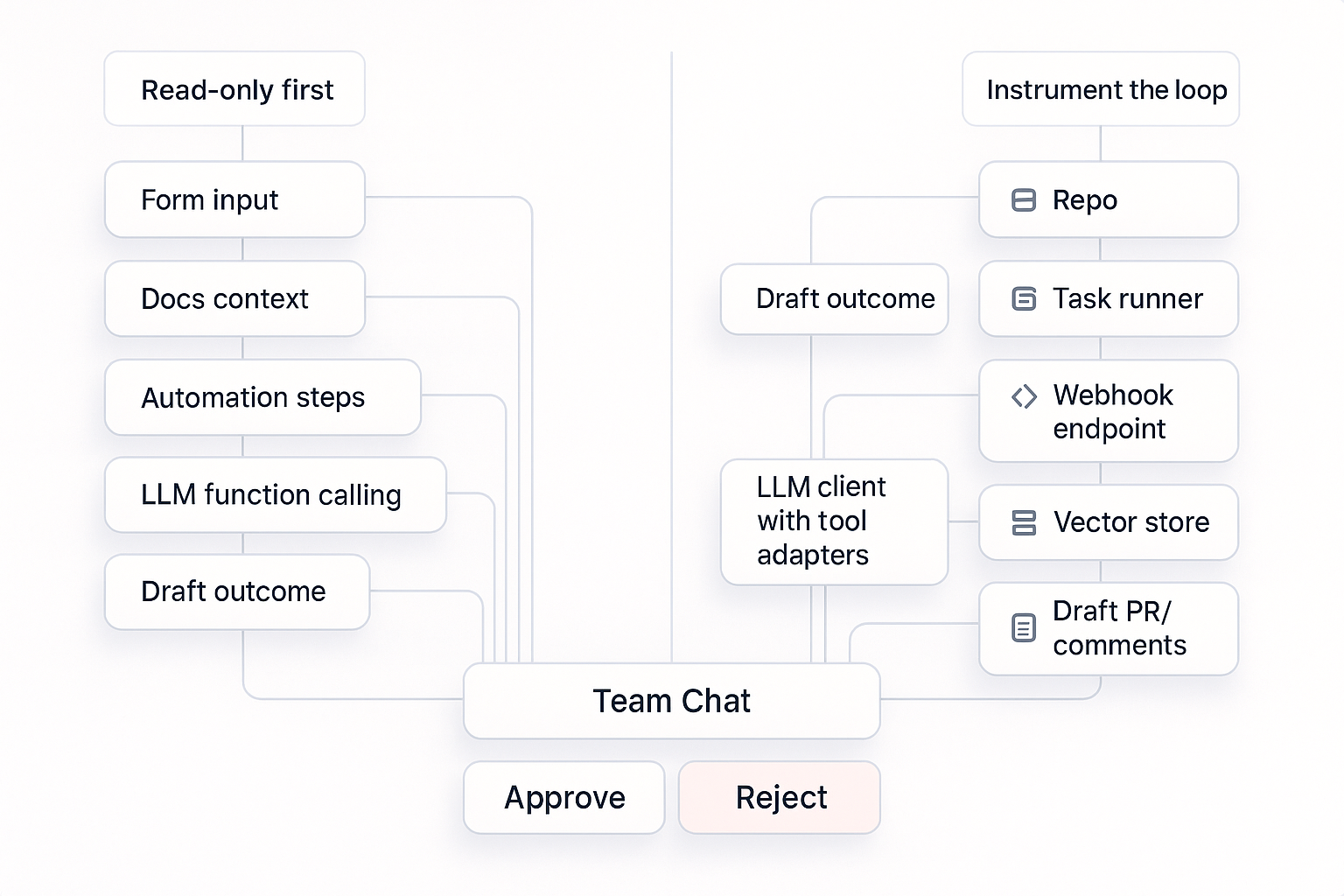
- No-code lane: simple form for inputs, docs for context, a basic automation tool to chain steps, and an LLM that supports function calling for structured outputs.
- Code lane: a tiny repo with a task runner, an HTTP endpoint for webhooks, one vector store if needed, and a single LLM client with tool adapters added one at a time.
- Keep both lanes living next to team chat for visible approvals and escalations, so nothing disappears.
- Start every action read-only. Graduate to write access only after 50 plus reviewed outcomes look clean.
I always start actions read-only and only grant write access after 50 plus reviewed outcomes look clean.
Guardrails I actually use
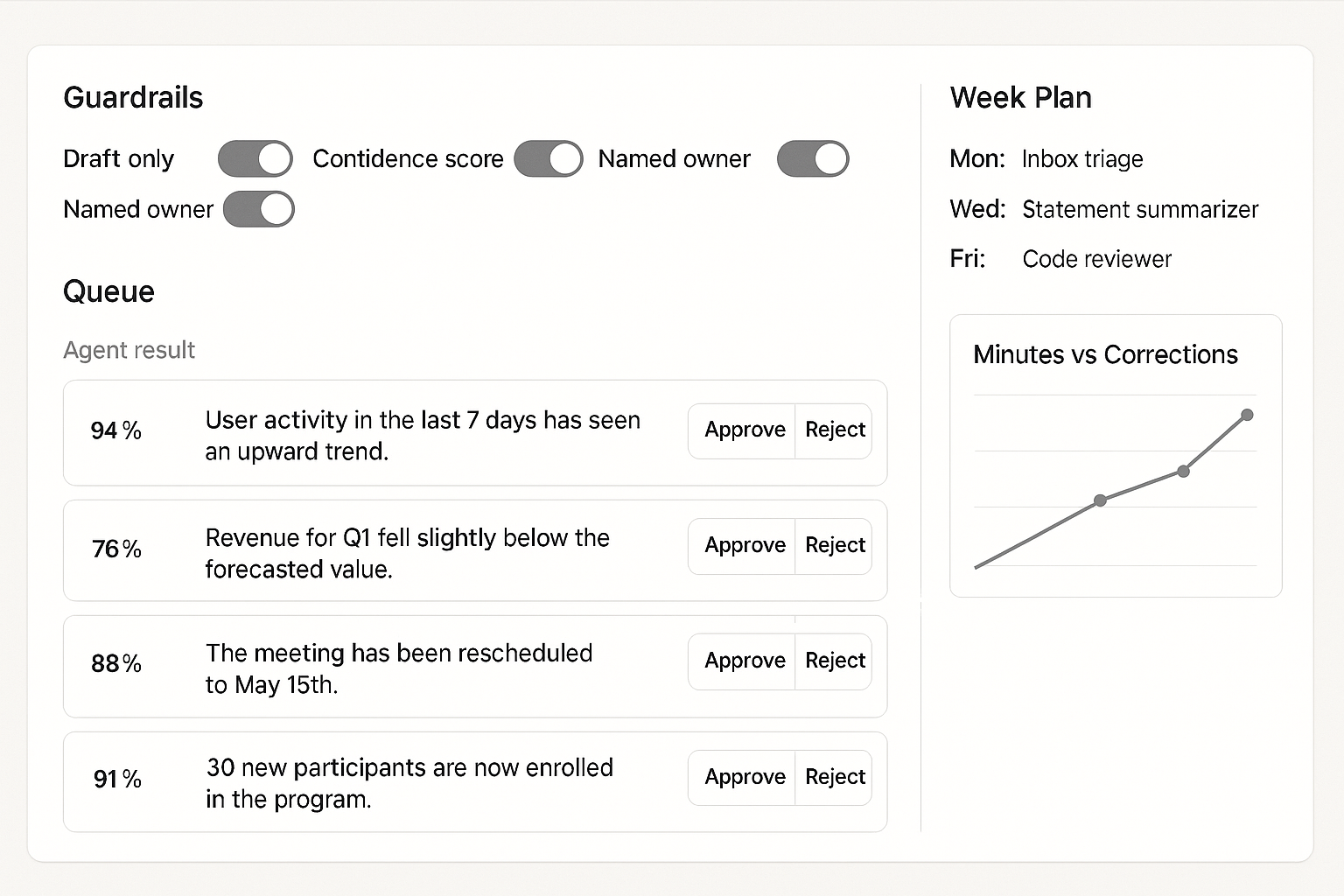
I don’t let new agents push buttons unsupervised. Every action ships as a draft first. Every decision carries a confidence score. Every critical step has a named owner in chat. If an agent can’t explain itself in two sentences, it pings a human. If it touches money or customer data, it stays in sandbox until the pattern is boringly reliable.
What I’m building this week
I’m treating the next seven days like an agentic bootcamp with one goal: reduce time to first outcome. Monday, I’m attacking the inbox I dread with a triage agent that categorizes, pulls context from our docs, and drafts replies behind a big approve button. Wednesday is a statement summarizer for finance ops that tags anomalies and proposes journal entries in sandbox. Friday, I’m adding a suggestion-only code reviewer to our smallest service to catch missing tests and risky changes. If the team hates it, I’ll kill it. If not, it stays.
Throughout the week I’m tracking two numbers only: minutes saved and corrections made. If minutes saved grows faster than corrections, it graduates from experiment to habit.
I track only two numbers: minutes saved and corrections made, and I keep going when minutes saved grows faster than corrections.
FAQ
What is agentic AI in plain English?
It’s an AI setup that does more than chat. An agent can perceive a situation, plan a small sequence of steps, use tools or APIs, and deliver a draft outcome. You keep a human in the loop until the pattern is trustworthy.
Is agentic AI safe for finance or compliance work?
Yes, if you scope it tightly and keep approvals in place. Start with read-only access, ship draft actions, and require human sign-off for anything touching money or customer data. Track false positives and only expand when error rates fall.
Do I need advanced frameworks to start?
No. A forms app, a docs store, a lightweight automation tool, and an LLM that supports function calling will get you far. Add complexity only when your acceptance rate and use-case depth demand it.
How do I measure success quickly?
Use two numbers: minutes saved and corrections made. If minutes saved is compounding faster than corrections, keep going. If not, tighten the scope, improve prompts or tools, and try again.
Which model should I use?
Pick any modern LLM with reliable function calling and tool use, then optimize around your data and latency needs. The loop design and guardrails matter more than the logo, especially in your first week.
The signal beneath the headlines
Across Nvidia’s support on March 21, Adobe’s finance push on March 22, the financial crime work on March 22, and Linux Rust reviews the same weekend, the message is clear: agentic AI now has permission to operate where quality really matters. That’s my permission slip too. Narrow the problem, instrument the loop, and decide where a human stays in the chain. Pick one workflow, ship a tiny agent with training wheels, and let reality teach you the rest. I’m doing it right alongside you.