
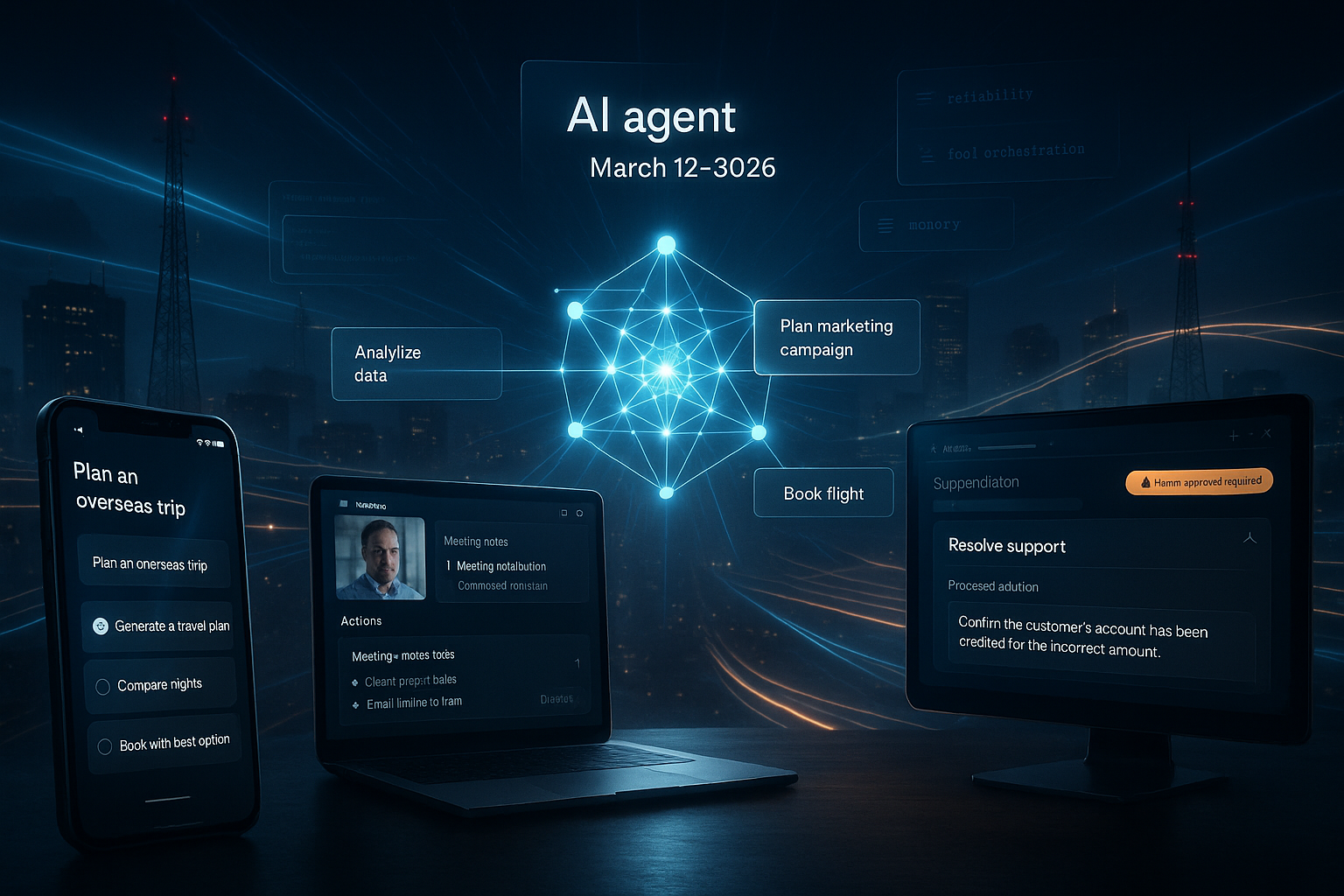
Agentic AI just had a week I couldn’t ignore. I’ve been testing agents quietly in the background, but these updates made it clear that we’re moving from cute demos to real outcomes fast.
Quick answer: Between March 12 and 13, 2026, Alibaba launched OpenClaw, Zoom expanded enterprise agents, Zendesk bought Forethought, Lyzr raised funding, and ZTE with Grameenphone pushed autonomous networks. If you’re new, start with one clear workflow, use native tools, write a single goal prompt, and add a human approval step.
My starter recipe: pick one clear workflow, use native tools, write a single goal prompt, and add a human approval step.
What just happened and why I changed my mind
Alibaba’s OpenClaw put agentic AI in consumers’ hands
On March 13, 2026, Bloomberg reported that Alibaba debuted OpenClaw, a consumer app focused on autonomous, goal-driven tasks. Consumer habits set workplace expectations, so if OpenClaw normalizes delegating multi-step tasks, teams will expect the same from their work tools. That’s a big shift.
Zoom turned meetings into action hubs
On March 12, 2026, Computer Weekly covered Zoom’s expansion of enterprise agentic AI. Instead of just summarizing, agents now drive meeting, messaging, and support workflows inside Zoom. If your team already lives there, adoption friction drops to nearly zero.
I look for agents inside tools we already live in to make adoption friction drop to nearly zero.
Zendesk bought Forethought to accelerate agentic service
Also on March 12, 2026, CX Today noted Zendesk’s move to acquire Forethought. Support is the most natural proving ground for agentic AI because goals, actions, and metrics are crystal clear. This is a strong signal that agent pilots are graduating to production.
Lyzr raised $14.5M to harden the plumbing
On March 12, 2026, Finovate reported Lyzr AI raised $14.5 million at a $250 million valuation to scale agent infrastructure. Reliability, tool orchestration, memory, and safety are the unsexy parts that make agents useful. Seeing capital flow here tells me the ecosystem is stabilizing.
ZTE and Grameenphone are building autonomous networks
On March 13, 2026, Developing Telecoms shared that Grameenphone and ZTE plan to run telecom networks with LLMs and agents. When telcos say they trust agents to watch, plan, and fix, the sandbox era is over. This raises the bar for safe human handoffs.
If you’re starting from zero, here’s the mindset
I used to think the game was good prompting. This week reminded me it’s about outcomes across steps. You don’t need to be a developer, but you do need to speak in goals, tools, and review loops. Think job briefs, not vibes.
I think in goals, tools, and review loops now, and I write job briefs, not vibes.
My quick-start playbook I wish I had
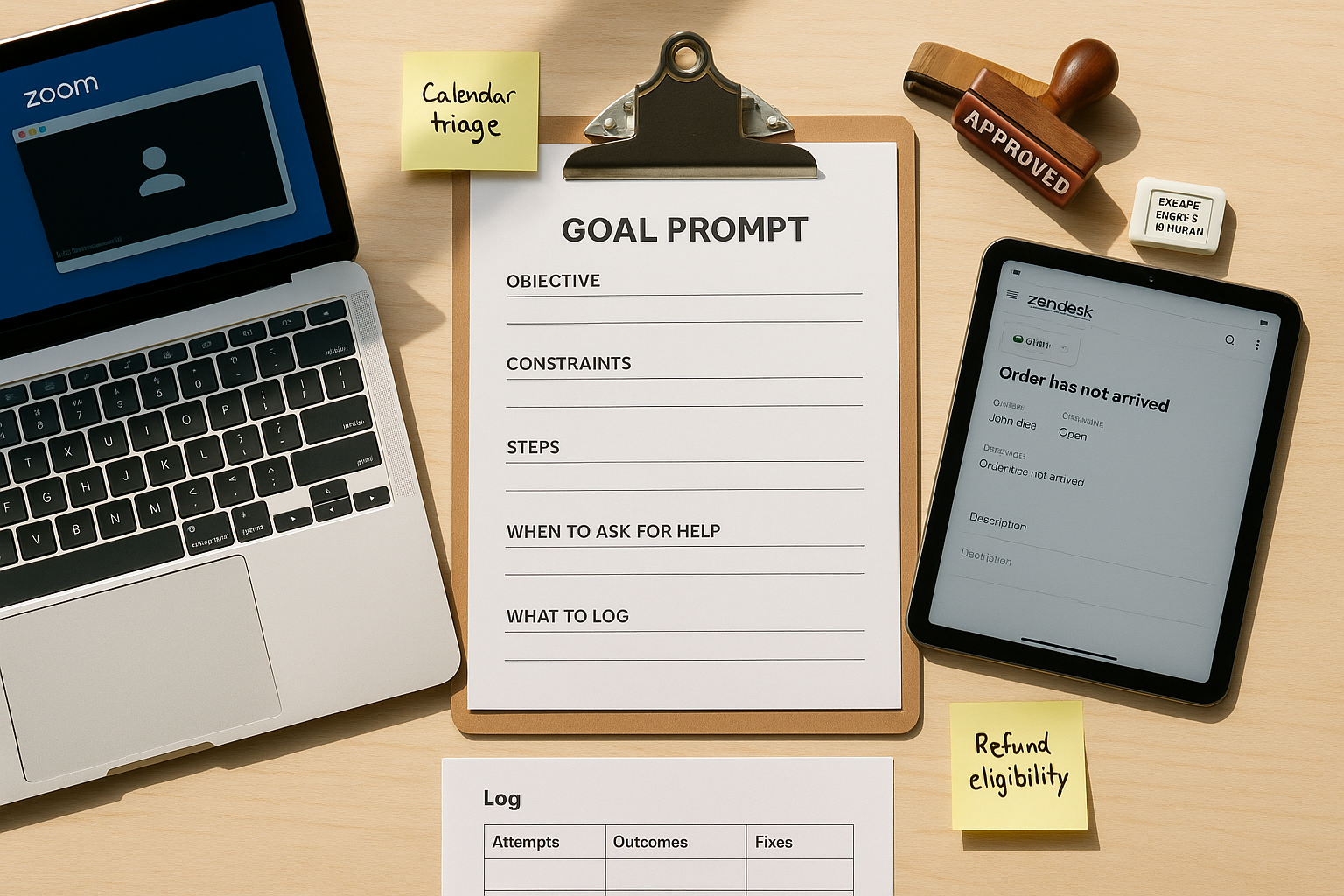
- Pick one repetitive workflow with a clear definition of done, like calendar triage or refund eligibility.
- Stay inside tools your team already uses, like Zoom or Zendesk, to remove change management.
- Write one strong goal prompt with objective, constraints, steps, and when to ask for help.
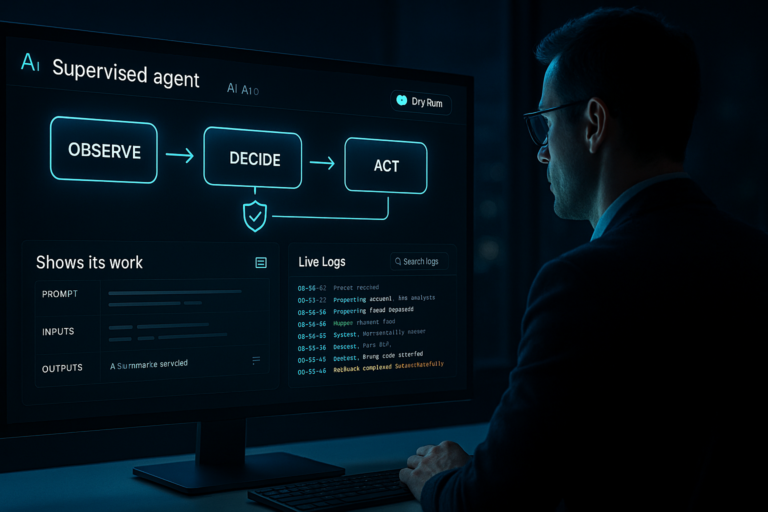
- Add a human approval step and an easy escape hatch back to a person.
I always add a human approval step and an easy escape hatch back to a person.
How I’d test this next week
If you run customer support
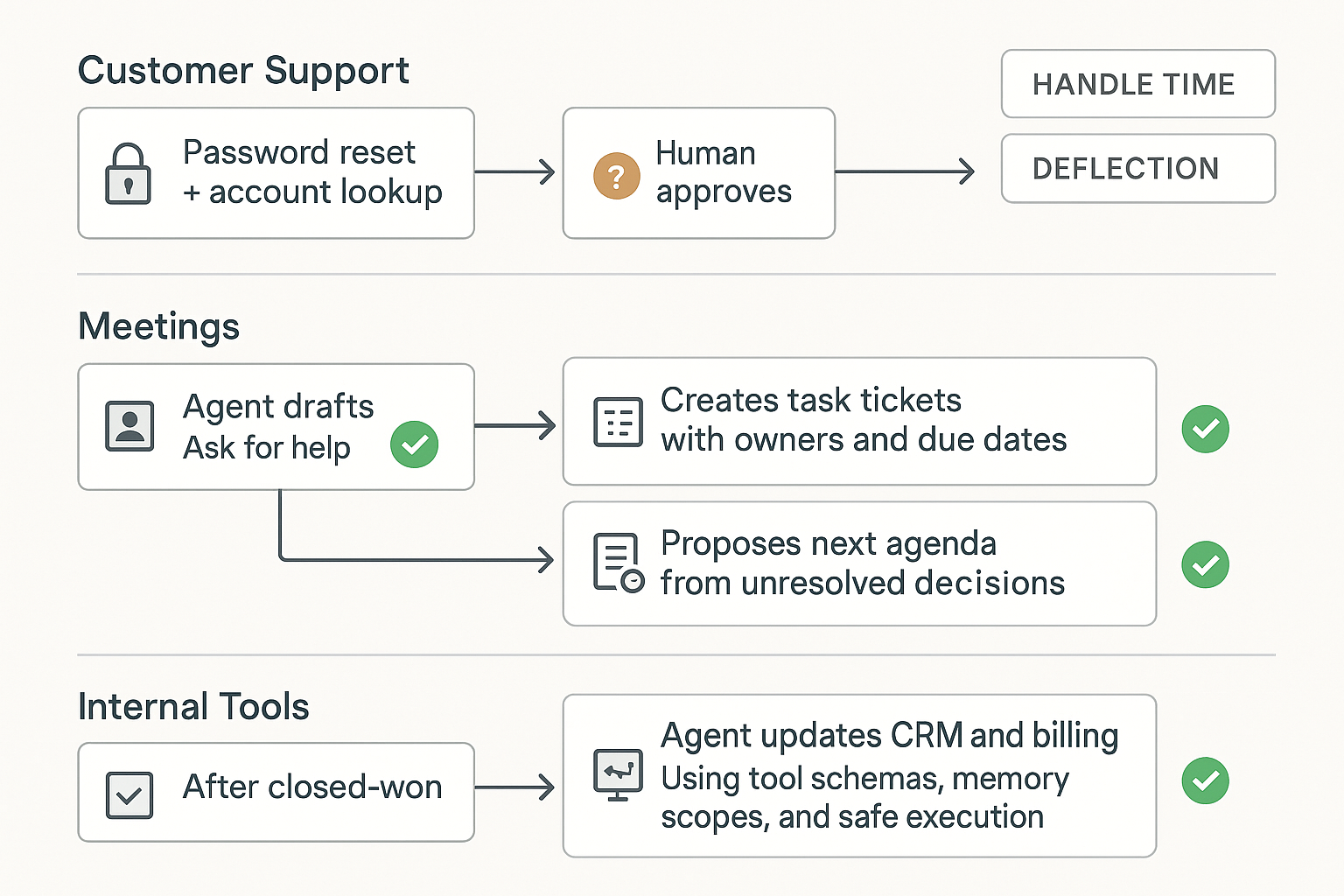
Lean into Zendesk’s Forethought integration. Start with a narrow path like password resets plus account lookup. Let the agent draft the resolution, keep a human in the loop, and track handle time and deflection. You’ll see wins quickly without risking brand tone.
If your world is meetings
Use Zoom’s agent features to go beyond summaries. Give the agent jobs like drafting follow-up emails, creating task tickets with owners and due dates, and proposing the next agenda based on unresolved decisions. Shift from notes to action.
If you’re building internal tools
Watch the infrastructure space Lyzr is tackling and get comfortable with tool schemas, multi-agent routing, memory scopes, and safe execution. Even a simple agent that updates CRM and billing after a closed-won deal can save real time if it runs reliably.
Even a simple, reliable agent that updates CRM and billing after a closed-won deal can save real time.
The pattern I see behind these headlines
Consumer adoption pressures the enterprise. OpenClaw will normalize agents for everyday tasks, and those expectations spill into work. Horizontal platforms like Zoom are embedding agents where we already operate. Vertical platforms like Zendesk are packaging outcomes so teams don’t reinvent the wheel. Infrastructure is getting funded, which means fewer paper cuts and more dependable stacks. Even critical infrastructure is leaning in, as ZTE and Grameenphone show, with strong guardrails.
Beginner mistakes I made so you don’t have to
I used to say things like “help with support.” That isn’t a job. Now I write briefs with objective, step plan, allowed tools, when to ask, and what to log. I also skipped logs for too long. A simple spreadsheet of attempts, outcomes, and fixes becomes your improvement engine.
I also thought more models meant better results. In practice, one capable model with the right tools and a tight review loop beats a swarm of agents arguing in a terminal. Start small, ship something boring, then iterate.
What I’m watching next
How fast OpenClaw-style habits leak into work. If people trust agents with travel or personal finance, office adoption will sprint. Whether Zoom and Zendesk publish simple playbooks to go from pilot to production with metrics baked in. And which infrastructure patterns win around tool calling, safe sandboxes, and memory. I’m betting on fewer broken demos and more dependable outcomes.
If I had to start today, here’s my stack
Non-technical: stay in your current tools. If your team is on Zoom, trial built-in agents for one recurring meeting and measure downstream tasks created and completed. If you’re on Zendesk, pick a single high-volume intent and have the agent draft resolutions for human sign-off.
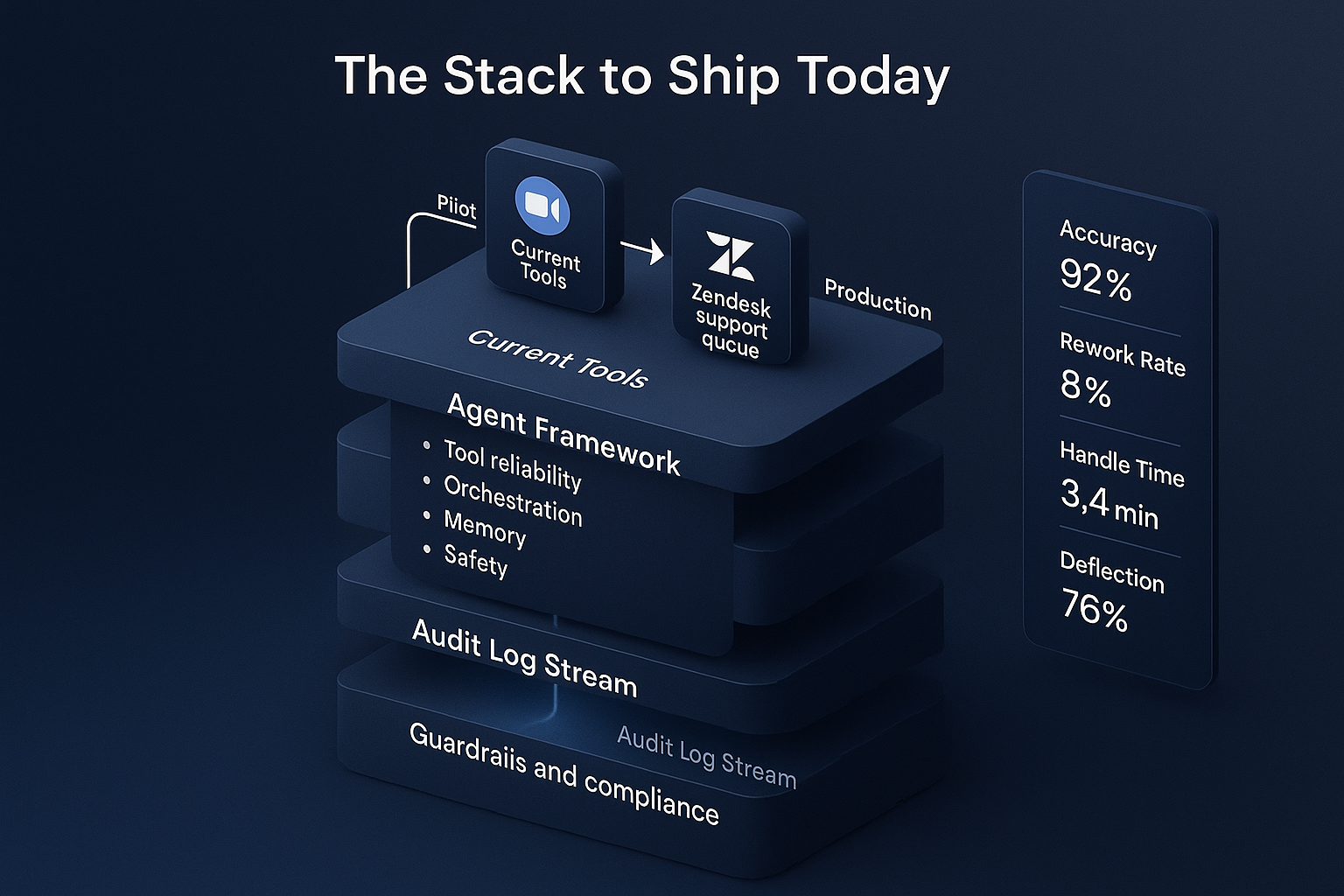
Technical: choose an agent framework that prioritizes tool reliability and audit logs. Wire one job with two tools, add a review step, ship it, then expand to a second job. Stability beats novelty right now.
FAQ
What is agentic AI in simple terms?
Agentic AI doesn’t just answer. It plans, uses tools, and executes steps toward a goal with review loops. Think of it as a teammate that can take a scoped job and move it forward, asking for help when unsure.
How do I pick my first agent use case?
Choose a repetitive workflow with a clear definition of done and low blast radius. Support triage, meeting follow-ups, and first-draft proposals are perfect. The clearer the outcome, the faster you see ROI.
Do I need a developer to start?
No. If your stack includes tools like Zoom or Zendesk, start with their native features. You’ll learn core patterns like goal prompts and approvals without writing a line of code.
How do I keep agents safe and on-brand?
Use guardrails in your goal prompt, restrict tool access, log every action, and keep a human approval step for anything customer-facing at first. Review logs weekly to tighten instructions.
What metrics should I track?
Track handle time, deflection rate, accuracy, and rework rate. Pair those with a simple log of agent attempts and human fixes. The combination tells you where to tune prompts, tools, or guardrails.
Bottom line: agentic AI isn’t a side quest anymore. Start small, keep receipts, and let the wins stack up.