

Agentic AI is moving faster than I expected. After this past week, I rebuilt parts of my stack and stopped waiting for perfect. If you stall even 30 days, you will likely redo your setup anyway.
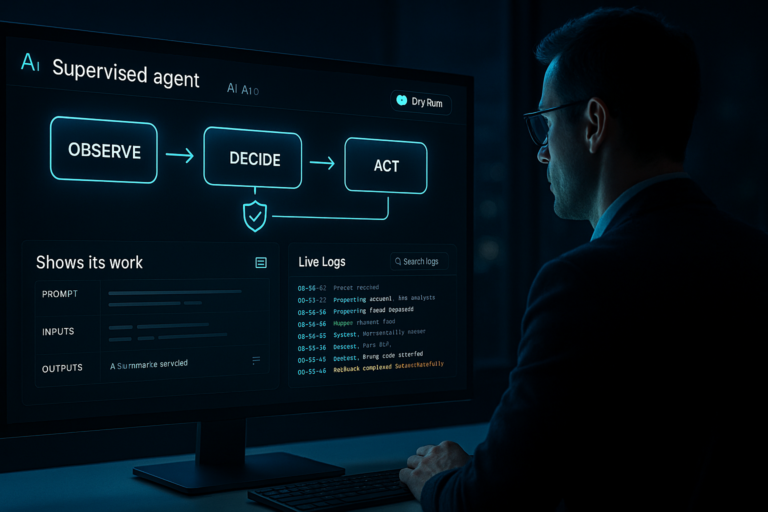
Quick answer: The stack is tilting toward agent workloads. On March 29, 2026, Arm announced an AGI CPU for agents, Fortune reported agents already driving about 10% of revenue for some brands, and the control layer conversation matured. Start with a tiny loop, strict tools, an evaluator, state-machine logging, and a one-week pilot tied to revenue.
I start with a tiny loop, strict tools, an evaluator, state-machine logging, and a one-week pilot tied to revenue.
What changed this week and why it matters
Hardware finally showed up for agents
On March 29, 2026, Arm framed its AGI CPU as the silicon foundation for the agentic AI cloud era. That line matters. Agents are bursty and tool-heavy, with more IO and scheduling than straight token-flinging. When chip roadmaps say agent, cloud pricing and capacity usually follow.

What I did: I stopped chasing local perfection for tool-using agents. I expect lower latency and cheaper orchestration for multi-step workflows this quarter, so my priority is a reliable control loop with clean metrics, not a hand-tuned dev box that never ships.
I prioritize a reliable control loop with clean metrics over a hand-tuned dev box that never ships.
Agents are already printing revenue
Also on March 29, 2026, Fortune highlighted brands seeing around 10% of revenue from agents. Not leads, not clicks. Revenue. That tracks with what I see: always-on assistants win on speed and consistency in pre-sales and post-purchase flows.

How I’d start from zero: pick one high-volume, low-creativity task tied to money. Fast lead response within 2 minutes. Abandoned-cart nudges that respect inventory. Appointment reminders that auto-reschedule. Give your agent one job, tight scope, clear success metrics, then expand.
I give my agent one job with tight scope and clear success metrics, then expand.
The control layer is the new OS for agents
On March 29, 2026, Inc42 argued the control layer decides wins and losses. I agree. You stitch a planner, tool registry with strict schemas, short-term memory, long-term memory, and an evaluator. When people say their agent ignores instructions, it is usually missing an evaluator or using fuzzy tool contracts crammed into one mega prompt.
My rule of thumb: make tools dumb and reliable, let the model plan, and never let it approve its own work. If a fact matters, store it. If a step matters, check it.
I make tools dumb and reliable, let the model plan, and I never let it approve its own work.
Close the loop or your agent will ghost you
HackerNoon’s March 29, 2026 piece captured the boring truth: retries, backoff, circuit breakers, and audit logs are the whole game. Real APIs 500. Calendars reject malformed times. PDF parsers choke on giant scans. If you stop at the first tool call, you will miss the silent fails that show up as human escalations later.
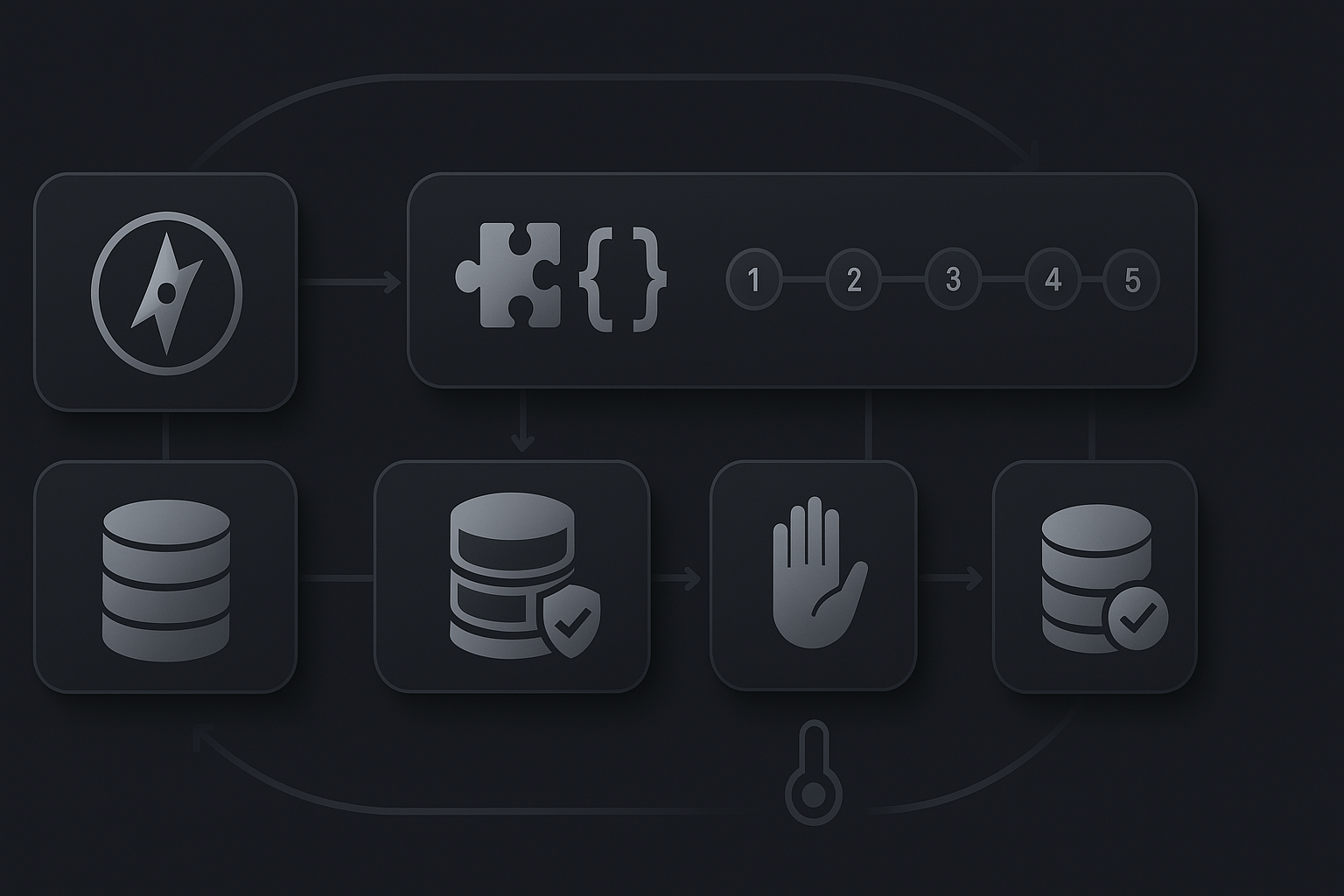
What works for me: I track every step as a state machine with a request ID. If the evaluator sees a mismatch between plan and world state, it retries with cool-down, then routes to a human after a few attempts. The run is not done until the system of record actually reflects the change.
I do not mark a run complete until the system of record reflects the change.
Vendors sprint, teams crawl
On March 28, 2026, SiliconANGLE called out the gap between flashy demos and enterprise reality. I see the same thing inside big orgs. The jump from cool to compounding happens when one person owns an outcome, ships a one-week pilot, and talks to users daily.
If you are stuck in slide mode, shrink the blast radius. One metric, tiny dataset, visible owner. Ship, watch live runs, fix the top three errors, repeat.
My 1-week agent blueprint
This is how I get results without turning it into a research paper.
- Pick one repetitive, revenue-adjacent task with a clear source of truth.
- Write tool contracts first with strict schemas and timeouts, and test them without AI.
- Use a tiny planner prompt that can only pick from those tools with a single-sentence goal.
- Log each step with a request ID and track state transitions so you can debug fast.
- Keep a human in the last 5% and ship by day 5, then watch runs and patch the top issues.
What I changed in my stack this week
Arm’s March 29 announcement pushed me to favor cloud runs for tool-using agents and keep local for batch summarization and offline evals. If the cloud gets cheaper and faster for loops, I want a control layer ready to ride it.
Fortune’s revenue data made me double down on pre-sales and retention use cases. I still love internal RPA, but pipeline and churn moves get priority.
Inc42’s control-layer focus reminded me there is no silver bullet product. I keep the planner small, tools boring, and the evaluator strict. When I’m tempted to burn tokens on a flaky plan, I add an explicit check instead.
HackerNoon nudged me to add a circuit breaker to my booking agent. If three calendar calls fail inside five minutes, stop and ask a human. No more 2 AM retry storms.
SiliconANGLE’s vendor-vs-team reality check made me add weekly office hours with actual users. If a sales rep says a message sounds robotic, I treat it as data and fix it that day.
FAQ
Do I need multiple models for a solid Agentic AI setup?
No. Start with one capable model and good tools. Most issues that feel like model quality are missing evaluators, fuzzy tool contracts, or weak checks. Add reranking or a helper model only after you can name a clear bottleneck.
How do I stop agents from hallucinating actions?
Never allow free-typed side effects. All actions go through tools with strict input validation, and the evaluator confirms system state after critical steps. If the state did not change, it did not happen.
When should I add memory?
Add short-term memory on day one so the agent can track its own attempt. Add long-term memory only when you see recurring questions that truly need history. The fastest way to break an agent is giving it a diary it never reads.
What should I measure first?
Pick one outcome tied to money or time saved. For pre-sales, speed-to-first-response and booked meetings. For support, resolution rate and save offers accepted. Log every step so you can attribute wins and patch failures.
The quiet advantage if you start now
This week felt like a turn. Hardware is targeting agent workloads, media is finally covering revenue, and the architecture chat moved from demo sizzle to control-layer choices. If you ship a tiny, outcome-first agent now, you will be ready as infra costs drop and teams look for proven wins they can copy.
If you are on the fence, give yourself a week. Keep the plan small, the tools strict, and the loop closed. I will take a reliable two-step agent with receipts over a 45-step demo any day.