

Agentic AI just compressed my timeline
Agentic AI stopped being a lab toy for me this week. After the March 17 to 18, 2026 news cycle, I quit treating it as a demo and started wiring it into real work.
Quick answer: Agentic AI is now delivery-grade. Between Nvidia’s 10-year workforce outlook on March 18, Samsung and Nvidia’s factory push on March 18, Siemens’ IC design boost on March 17, and Workday’s execution pattern on March 17, I see a clear starter path: pick one weekly workflow, sketch the loop, ship a read-only prototype, add two guardrails, and measure the delta.
I start with one weekly workflow, sketch the loop, ship a read-only prototype, add two guardrails, and measure the delta.
What changed this week, in plain English
Nvidia’s workforce forecast set the tone
On March 18, 2026, Computer Weekly reported Nvidia expects AI agents to dominate its workforce within a decade. I don’t read that as replacing people. I read it as tasks going to agents by default while humans design, supervise, and handle exceptions. The center of gravity for work is moving from apps to agents.
Factories and chips moved first
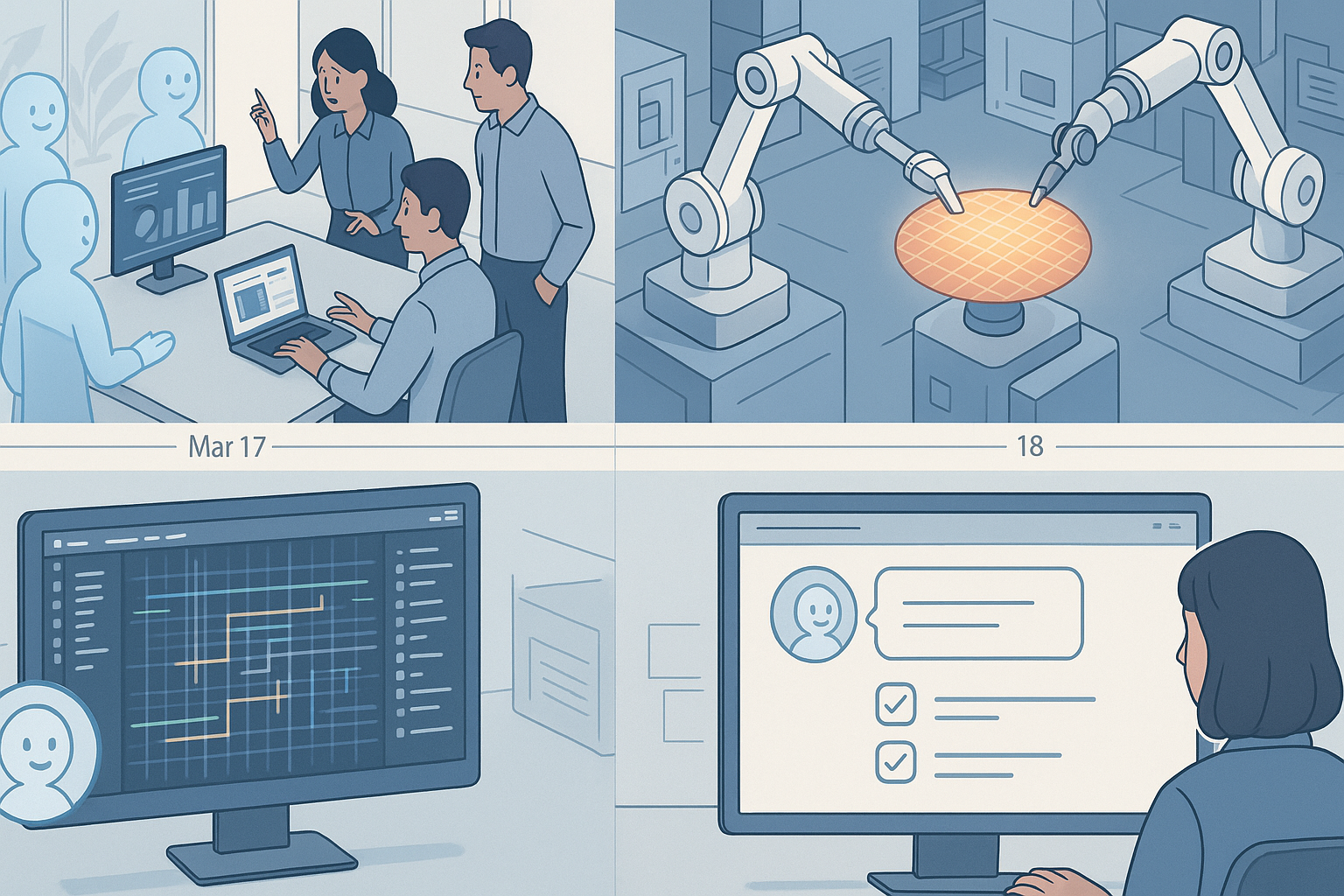
On March 18, 2026, The Fast Mode covered Samsung and Nvidia applying agentic AI to semiconductor production. This is multi-step, high-stakes orchestration across machines and data streams, not a parlor trick. A day earlier on March 17, Siemens added agentic help to Questa One for IC design, which means complex engineering can be decomposed, verified, and iterated by agents. If that’s reliable enough for chips, it’s more than enough for my weekly reports or inbox triage.
Enterprise workflows became execution engines
On March 17, 2026, CIO highlighted Workday integrating Sana so requests can become outcomes. Instead of asking for a report, you ask for the result and the system figures out steps, tools, and checks. That’s the agentic loop in the wild.
Security shipped, governance still trails
Security is getting baked in sooner, but practical governance still needs work. I’m taking that as a nudge to log every step, set confidence thresholds, and define when my agent must stop and ask.
Agentic AI, without the jargon
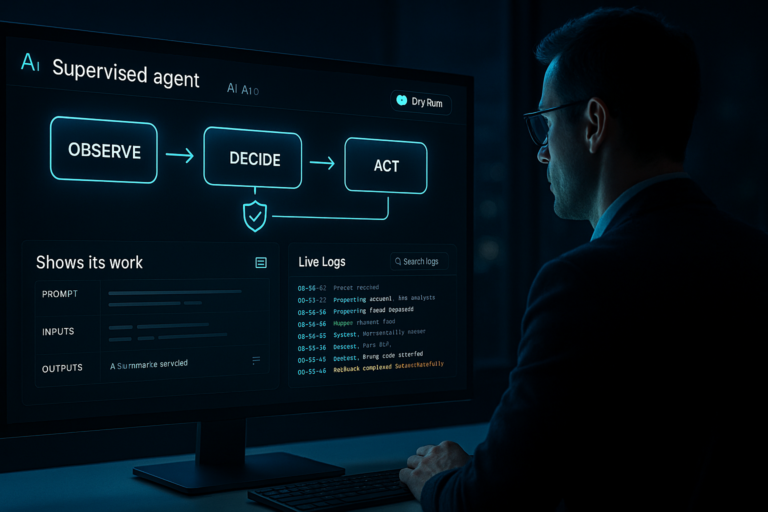
Traditional AI answers a question. Agentic AI takes a goal, plans steps, calls tools or APIs, checks its own work, and loops until done or it times out. The loop is the power and the risk. Good boundaries, good logs, and clear stop conditions keep that loop useful.
I keep boundaries tight, logs good, and stop conditions clear to make the loop useful.
Exactly how I’d start this week
Pick one boring workflow
I look for a weekly task with one input, one clear output, and a crisp definition of done. Think CRM hygiene, a KPI rollup, or support triage.
Sketch the loop on paper
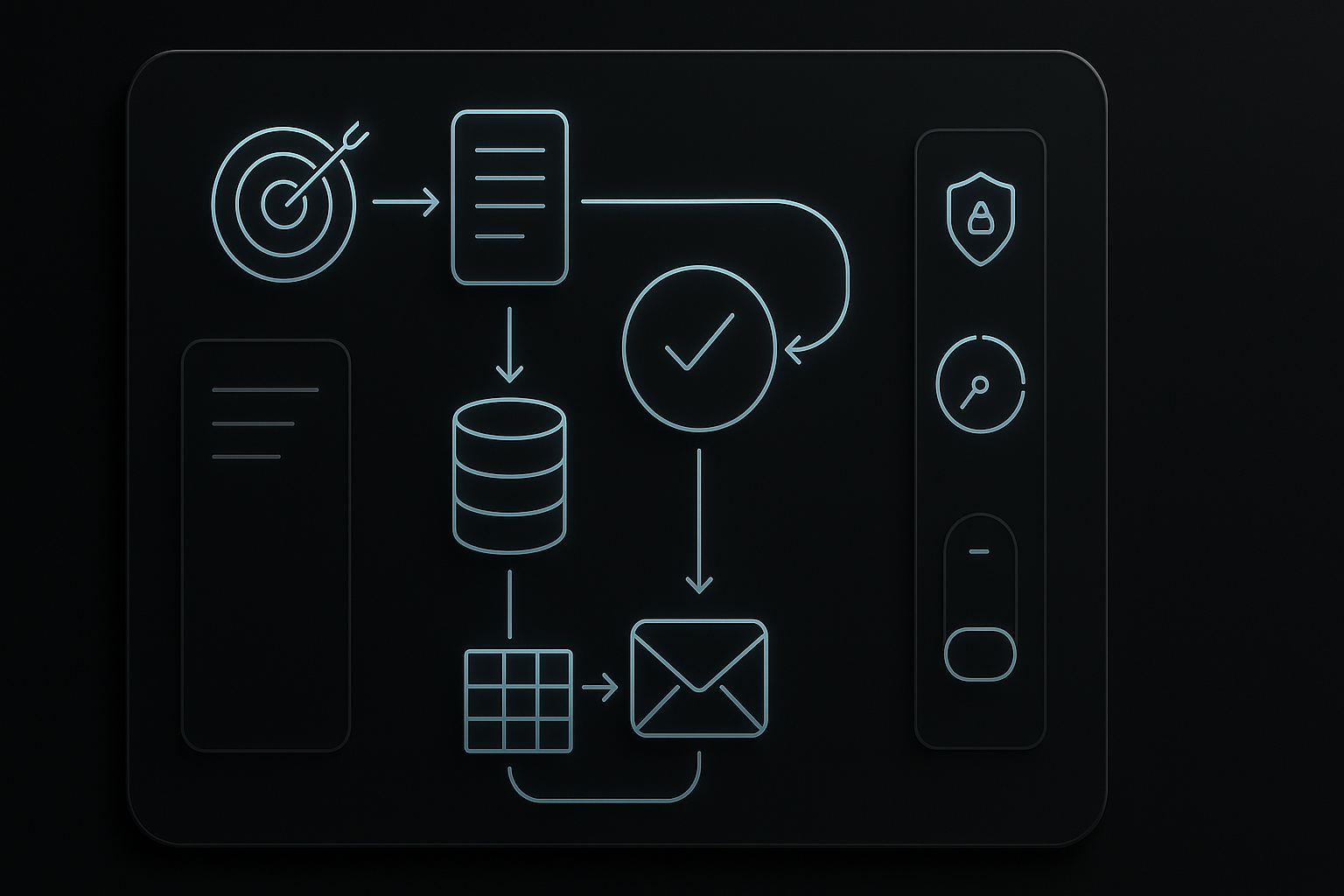
I write five lines: Goal, Tools, Steps to try, When to stop, What to log. I also give the agent permission to ask me when confidence is low or data is missing.
Build a tiny prototype
Inside a big stack like Workday, I mirror that execution pattern with approved tools and a sanity check. Solo, I use a hosted LLM with function calling, a spreadsheet, a calendar API, and email. Boring on purpose beats clever and brittle.
Add two guardrails on day one
Read-only first, then write. Log every action with inputs and outputs to a single place. If money moves or customers see it, require a human approval step.
I always go read-only first, then write, and I require human approval if money moves or customers see it.
Measure the before and after
I track one number. Time saved, errors reduced, or cycle time to done. Enough to decide if I should invest more.
- Days 1 to 2: Choose the workflow and sketch the loop with tools and stop rules.
- Days 3 to 4: Ship a read-only prototype with full logs. Run it on last week’s data.
- Day 5: Add one approval and one self-check. Compare results to your manual baseline.
- Day 6 to 7: Flip to limited write mode and monitor. Tweak prompts, tools, and thresholds.

Where the big headlines fit your plan
Nvidia’s outlook is your permission to practice now
If agents will dominate workflows in a decade, the winning skill is orchestration. Pick the right tasks, set constraints, supervise the loop. That muscle starts on your own desk.
Samsung and Siemens remind me to verify
Industrial use cases demand repeatability. I lean on explicit tools, deterministic steps where possible, and a built-in verification pass before the agent calls anything final.
Workday’s pattern keeps me outcome focused
I avoid chatty question bots. I build job finishers. Clear end states make agents more valuable and less surprising.
Security basics I copy every time
Centralize secrets, scope permissions tightly, separate planning from execution, and keep audit trails. Even in a notebook, env vars and whitelists go a long way.
I centralize secrets, scope permissions tightly, separate planning from execution, and keep audit trails.
Traps I’ve hit so you don’t have to
I’ve over-engineered before defining the problem. I’ve also skimped on logs and then chased ghosts. My rule now: if I can’t read the last run and explain it in under two minutes, I’m not ready to scale.
Skipping human-in-the-loop is another trap. I only require reviews where actions are irreversible or sensitive. Money out, customer messaging, compliance. Everything else can flow with a confidence threshold.
How I’m thinking about jobs, realistically
I don’t expect a robot to take my chair. I expect my chair to come with a cockpit. The March 18 Nvidia signal reframed the future of work for me. Leverage goes to people who define outcomes, wire tools, and manage exceptions. That’s not sci-fi. That’s Tuesday.
I expect my chair to come with a cockpit, so I focus on defining outcomes, wiring tools, and managing exceptions.
My 30-day checklist
I’m committing to three things. One small agent per week that replaces a spreadsheet task. A one-page governance note per agent with purpose, tools, logs, and escalation. And a monthly teardown of one enterprise pattern I can translate to my stack.
FAQ
What is Agentic AI in simple terms?
It’s AI that takes a goal and executes. It plans steps, uses tools or APIs, checks its work, and loops until done or it times out. Think of it as giving your checklist to software.
Do I need special hardware to start?
No. A hosted LLM with function calling and a few safe tools is enough for week one. You can add vector search, RAG, and private models later if the use case proves out.
How do I keep agents from going off the rails?
Set tight scopes, start read-only, and log every action. Define stop conditions, confidence thresholds, and escalation paths. Add a verification pass before anything irreversible.
What’s the first workflow I should automate?
Pick a weekly task with a single source of truth and a clear done state. KPI packs, CRM hygiene, inbox triage, or meeting prep are great candidates to learn the loop without big risks.
Final thought
March 17 to 18 didn’t introduce something new. It removed excuses. Chips, factories, and enterprise stacks are moving from demos to delivery. You don’t need to match them. Start with one workflow, one loop. Ship it, learn, repeat. That’s the agentic mindset I’m taking into next week.