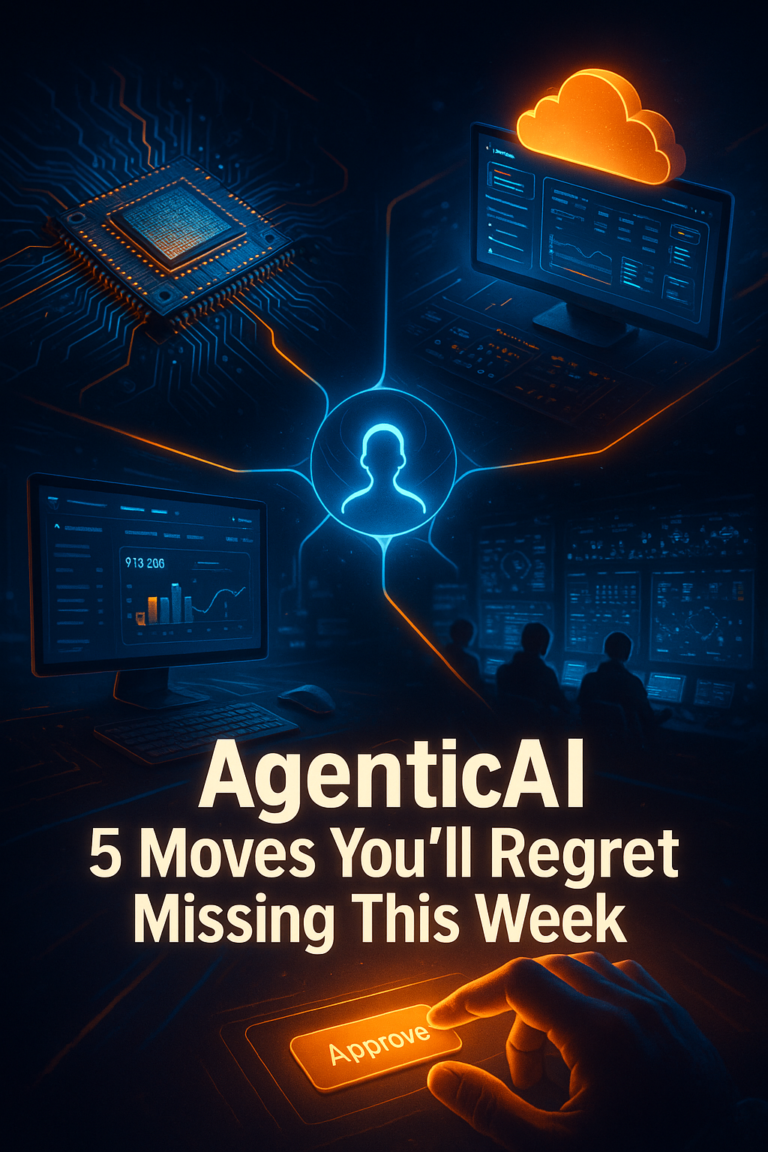

Agentic AI just crossed a line for me this week. It moved from hype to workflows I can actually ship, and I want to show you the exact plays I’m copying so you can skip the architecture rabbit holes.
Quick answer: want a fast win with Agentic AI this week? Pick a 5-step task, turn it into gated checks, give an agent read access and one write permission, log everything, and keep a one-click approval. Track first-pass approvals and net time saved for 14 days. If the numbers hold, widen the scope slowly and add one more write.
I keep it simple: I pick a 5-step task, gate each step, give read access and exactly one write, log everything, and keep a one-click approval.
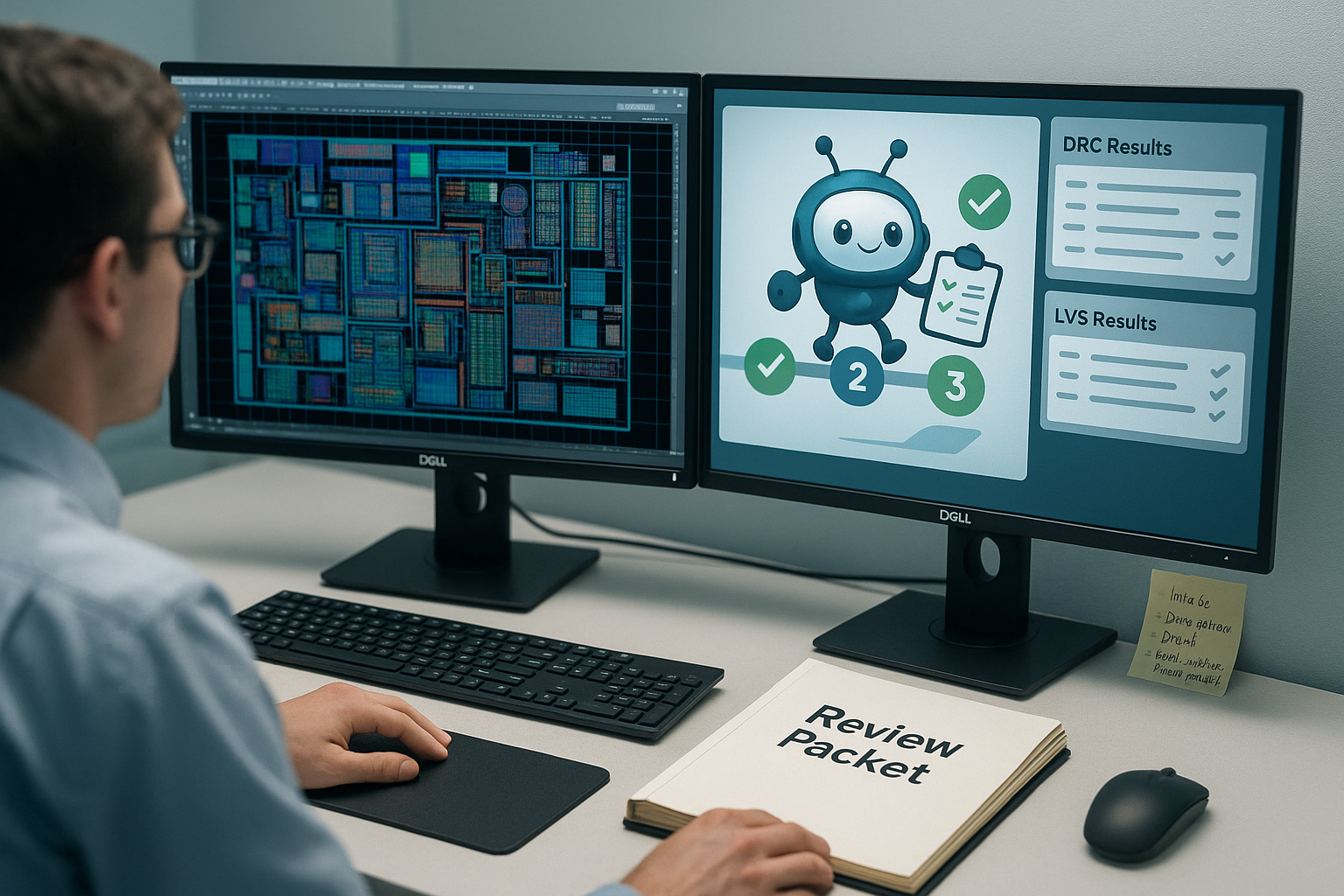
Siemens pointed agents at chip design and that’s bigger than it sounds
On March 23, 2026, Siemens launched its Fuse EDA AI Agent for automated design workflows, as reported by Evertiq. EDA is one of the most rules-bound, verification-heavy domains we have. If agents can operate parts of that flow under supervision, your marketing pipeline or sales ops absolutely can too.
What I’m copying
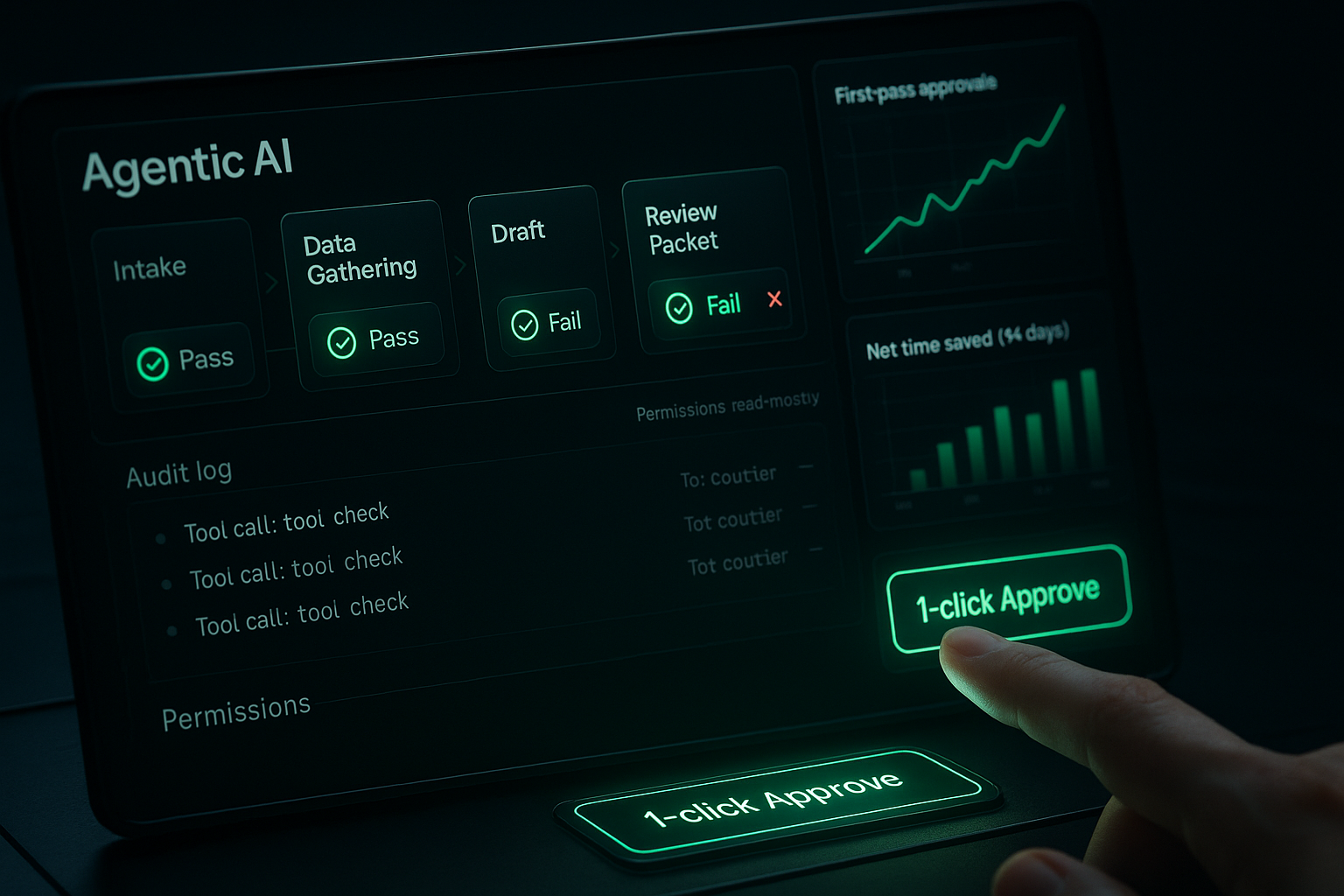
I build a micro-EDA out of any gnarly task: break it into gates, let the agent run each gate, and have it drop artifacts for sign-off. My flow looks like this in Notion plus a lightweight runner: intake brief, data gathering, draft, lint with checklists, review packet. I approve or bounce. Boring clarity wins.
Microsoft quietly laid down the guardrails agents actually need
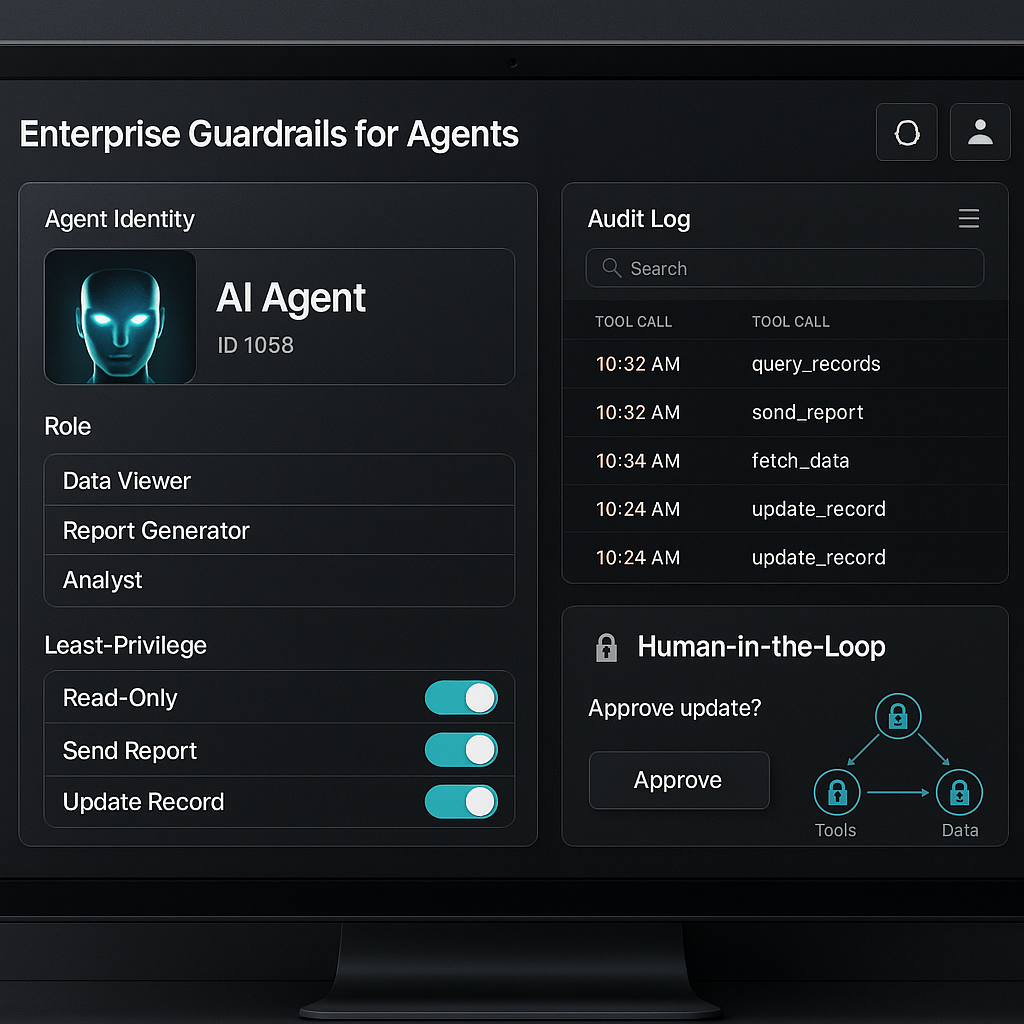
Also on March 23, 2026, Microsoft explained how it secures AI agents with Defender, Entra, and Purview, which Techzine Global covered. Most agent projects die on identity and audit. This ties agents into the stack IT already trusts.
My pre-flight security checklist
- Give the agent its own identity and role, never a shared human token. Mirror this with whatever IAM you use.
- Start with least privilege. Read-only first, then add the two writes it truly needs.
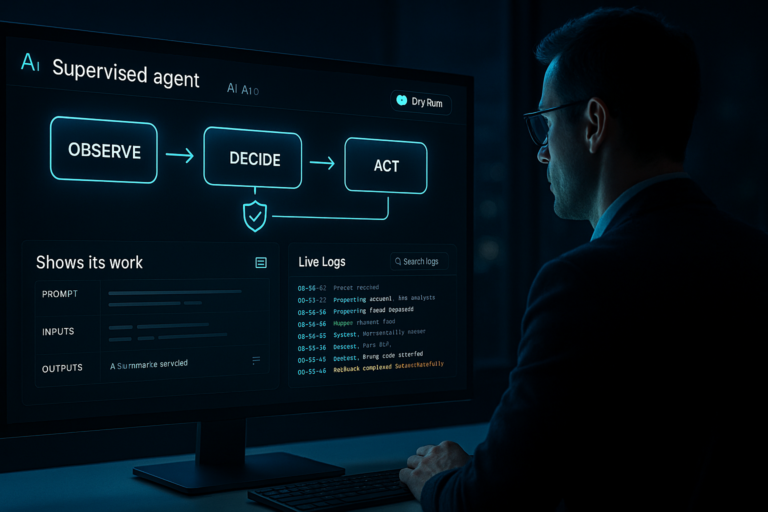
- Log every tool call somewhere you can search and export. If you can’t prove it, you didn’t automate it.
- Keep human-in-the-loop checkpoints. Even one-click approvals prevent silent drift.
Agents are not prompts. They are identities with permissions and history. Treat them that way from day one.
I treat agents like identities with permissions and history from day one.
Healthcare agents are finally landing real jobs
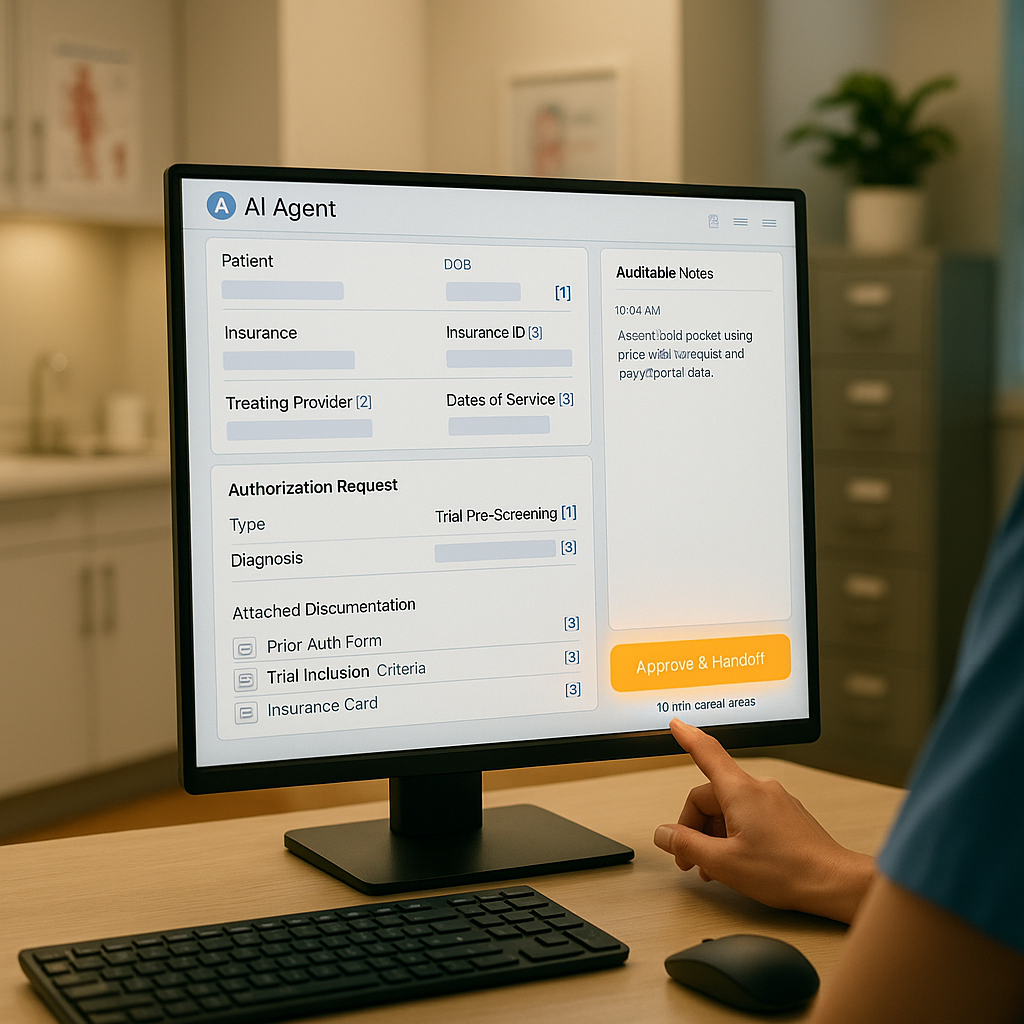
On March 23, 2026, PYMNTS reported agents finding footing in healthcare and pharma. That tracks with what I’m seeing: narrow, high-friction admin work getting cleaned up first. Think prior auth prep, trial pre-screening, benefits verification, and discharge follow-ups. None of this needs full clinical judgment to start, but all of it needs consistent data pulls, templated reasoning, and auditable notes.
How I prototype without getting burned
I stay out of PHI on the first build and simulate with de-identified data. I force citations for every field touched, and I keep the final decision with a human. My first target is a handoff packet that saves a nurse or coordinator 10 minutes. Once error rates are boring, I expand the surface area slowly.
I start without PHI using de-identified data, I force citations for every field, and I keep a human as the final decision.
Solopreneurs: the one-person unicorn stack I actually use
Also on March 23, 2026, Fortune quoted Alibaba.com’s president predicting the one-person unicorn. I felt that, not as hype but as a stack you can assemble this week. I run three narrow agent roles like teammates: a research agent that synthesizes decision briefs, an outreach agent that drafts and schedules but never sends without my checkpoint, and a storefront agent that maintains listings, syncs inventory, and answers common questions with my docs as retrieval. Narrow is the point. The minute one agent owns ten unrelated things, it invents authority it doesn’t have.
Unit economics note I learned the hard way: track agent-caused rework, returns, and churn. If those climb, you’re scaling noise, not leverage. Agents are great at scaling your taste and your process, not replacing them.
I track agent-caused rework, returns, and churn so I scale leverage, not noise.
Travel: why Google might win and what I’d do now
On March 23, 2026, PhocusWire argued Google is positioned to win agentic e-commerce in travel. I agree. Agents need structured, fresh, bookable data, and Google already sits on intent, inventory links, calendars, reviews, and payment rails. If a personal agent can confirm dates, book, and rebook in a thread, nobody wants seven tabs.
Make your catalog agent-friendly
Publish clean, machine-readable inventory with fast updates. Expose pricing, constraints, and cancellation rules in a way an agent can parse without scraping. Offer a simple checkout API with clear errors and a sandbox. Add rich metadata that kills ambiguity. You’re not optimizing for scrolling anymore. You’re optimizing for agents negotiating.
What I’m shipping this week
I’m shipping one concrete agent in a gated, auditable flow: a brief-to-deliverable pipeline for content updates. It’s identity-scoped, read-mostly, with two writes and a human checkpoint. I’m measuring two things for two weeks: first-pass approval rate and net time saved after fixes. If the curve looks good, I widen permissions and add one more step.
For two weeks I measure first-pass approval rate and net time saved before I widen permissions.
FAQ
What is Agentic AI in plain English?
Agentic AI is software that can take actions across tools to complete multi-step tasks under constraints and supervision. Think checklists, tool calls, logs, and approvals, not just one-shot prompts. It behaves like a junior teammate with a job description.
How do I start without a huge architecture?
Pick a task you do twice a week with at least five steps. Write the steps and pass-fail checks. Give the agent read access and exactly one write action. Log everything, keep a one-click approval, and measure for 14 days before expanding.
Are AI agents safe to use at work?
Yes, if you treat them like identities with scoped permissions and transparent logs. Start with least privilege, keep approvals in the loop, and connect agent access to your existing IAM and monitoring. Microsoft’s March 23, 2026 guidance is a solid reference point.
What’s a good first workflow for Agentic AI?
Research-to-brief, content updates, CRM hygiene, reporting rollups, or customer support draft replies with a human final click. Go for boring, high-friction work that benefits from consistency and citations.
Will Google dominate agentic travel?
They have the ingredients: intent data, links to inventory, calendars, reviews, and payments. You can still win by being the easiest to act on. Make your data clean, current, and bookable by third-party agents with minimal friction.
The bottom line
On March 23, 2026 we watched Agentic AI step into chip workflows, enterprise security, healthcare admin, solo business building, and travel commerce. Different arenas, same lesson: design the rails, ship something small now, and expand only when the numbers are boring in a good way.