
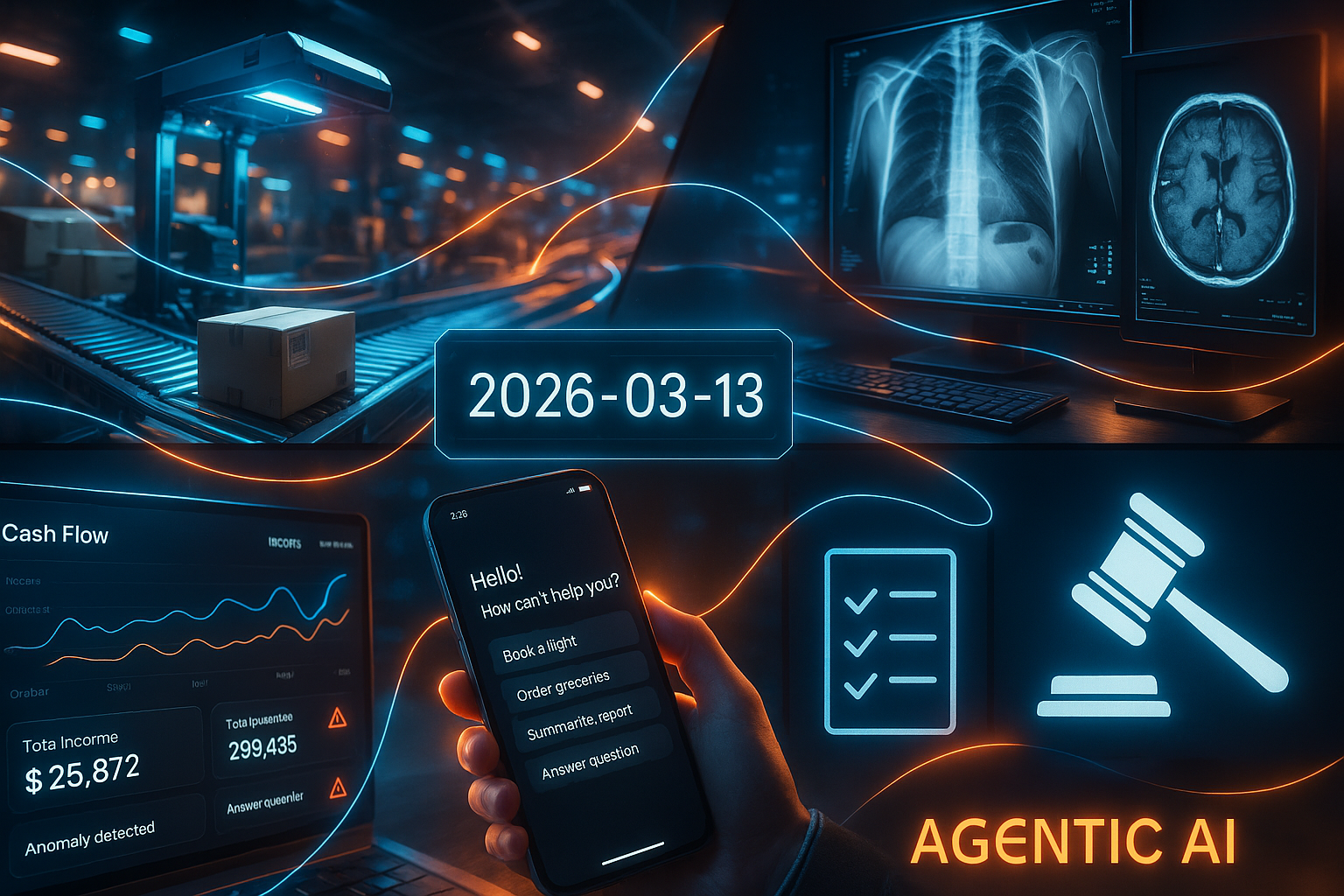
Agentic AI just hit a turning point on March 13, 2026. I watched five updates drop the same day, and it finally felt like rollout season, not hype season.
Quick answer: On March 13, 2026, FedEx targeted agents in 50 percent of workflows by 2028, Mastercard launched SMB agent tools, Alibaba expanded a mobile agent, radiology emerged as healthcare’s launchpad, and the UK issued practical guidance. If you’re new, start with one 10–15 minute task, keep approvals human for a week, and log every action before granting more permissions.
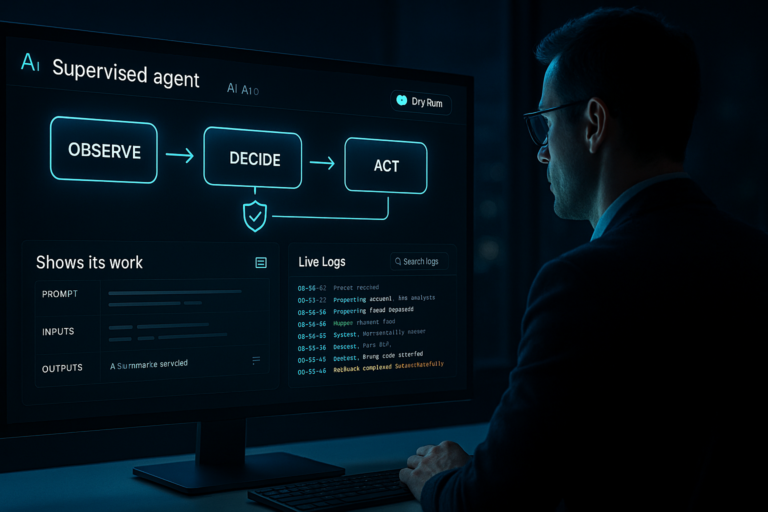
I always start with one 10–15 minute task, keep approvals human for a week, and log every action before granting more permissions.
FedEx is aiming agents at 50% of workflows by 2028
PYMNTS reported on March 13 that FedEx plans an “agent workforce” inside more than half of its workflows by 2028. That’s a logistics giant with brutal margins saying software teammates are moving from pilot to production.
To me, this signals two things. First, agentic AI is graduating from clever demos to measurable ROI. Second, reliability, auditability, and fallbacks are the new baseline at enterprise scale. If you want a north star for production-grade, think FedEx-level oversight, clear tool contracts, and cycle-time wins you can prove. Read the PYMNTS brief.
I treat reliability, auditability, and fallbacks as the baseline at enterprise scale.
Why this matters if you’re just starting
You don’t need a fleet to learn this. Map one tiny workflow that repeats daily, like triaging support emails and drafting first replies. Put an agent in the loop with read-only access. It proposes, you approve. Track minutes saved for a week, then decide what permission to grant next.

Mastercard launched agentic AI tools for SMBs
Also on March 13, FinAi News covered Mastercard rolling out agentic AI features for small and midsize businesses. Payments hide a lot of repetitive chores: reconciling payouts, matching invoices, chasing late payments, checking risk flags. Lowering the barrier here matters if you don’t have an in-house AI team. Here’s the coverage.
I’d tackle the repetitive payment chores first, especially if I don’t have an in-house AI team.
How I’d use it on day one
I’d start with a daily cashflow summary: auto-generate balances, flag anomalies, and add a short explanation in plain English. Keep approvals manual for a week, compare accuracy against your current process, then decide what to automate next. Let the tool make you smarter before it makes you faster.
I start with a daily cashflow summary, keep approvals manual for a week, then automate the next safe step.
Alibaba put a mobile agent in your pocket
PYMNTS also noted on March 13 that the Alibaba app widened access to its OpenClaw AI agent on mobile. That’s a clear UX signal: agents will live where we actually work and shop, not just behind laptops and integrations we don’t control.
Mobile-first agents reset expectations. If customers get an always-on assistant inside a superapp, they’ll expect similar autonomy everywhere else. For builders, it’s time to design for micro-moments with tight permissions and clear context windows.
What I’m watching next
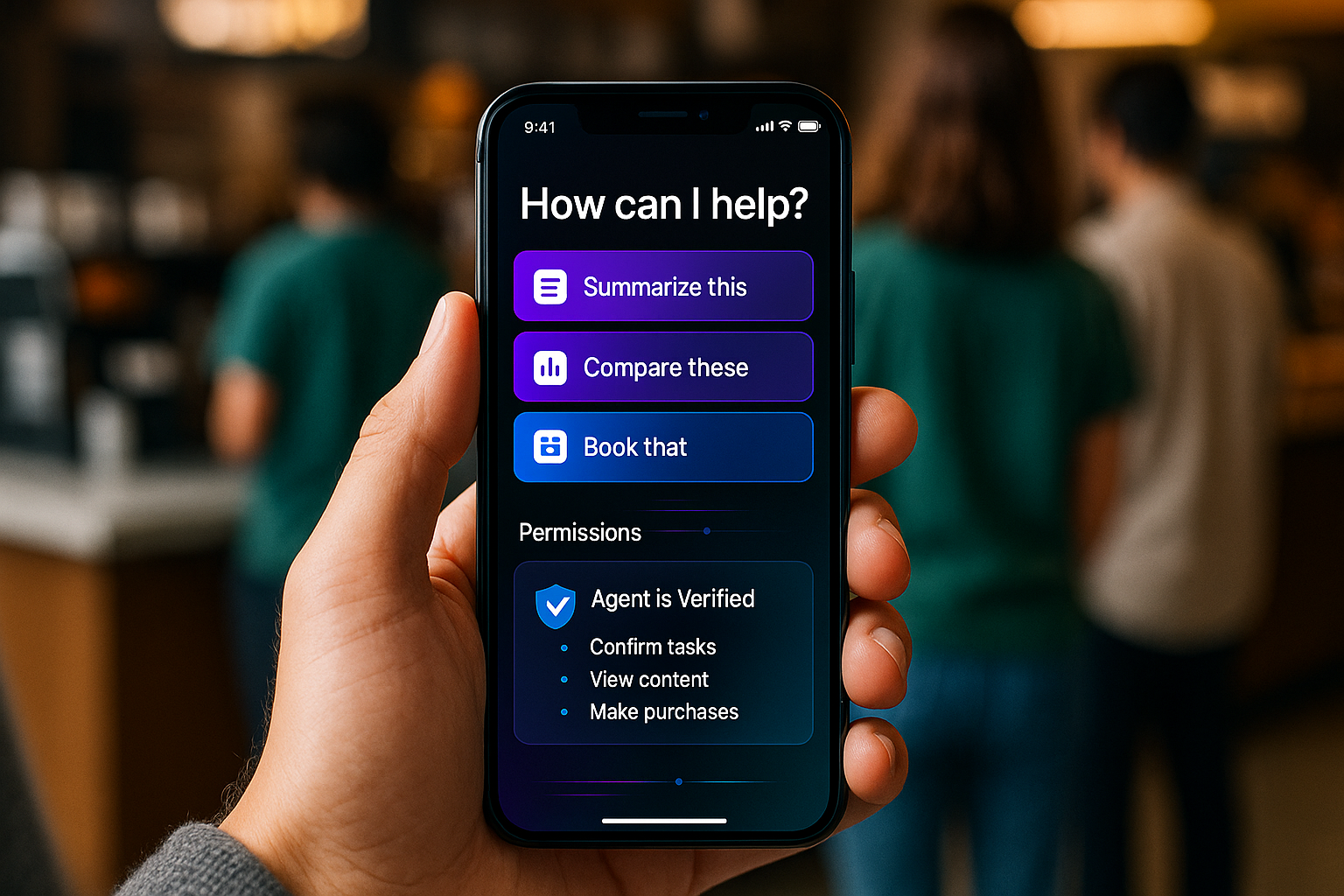
Three mobile patterns are next up for me: frictionless intent capture, safe context handoff across apps, and verified execution for sensitive actions. If you’re prototyping, ship one-tap tasks with strong confirmations. The best mobile agent is the one you trust while you’re in line for coffee.

Radiology looks like healthcare’s agentic launchpad
On March 13, Healthcare IT Today argued radiology is a natural first mover for agentic AI. It already runs on standardized imaging workflows and structured reports, with high-stakes collaboration. Agents don’t replace clinicians here. They shave minutes off prep, guideline lookups, structured impressions, and teeing up peer review.
How I’d borrow this playbook outside healthcare
Split any complex workflow into candidate agent steps and must-stay-human steps. Make the agent over-explain every action in a running log. Reward clarity, not cleverness. You’ll catch edge cases early and sleep better during audits.
I split complex workflows into agent steps and must-stay-human steps, and I ask the agent to over-explain every action in a running log.
UK guidance gave businesses a clearer path
Also on March 13, law firm Ashurst highlighted new UK guidance for deploying agentic AI. It didn’t read like a brake pedal. It read like lanes you can drive in and still ship. The real shift is mindset: you don’t need to pause innovation to be compliant. You do need to know what your agent touched, why it acted, and how you’ll roll it back. See the Ashurst note.
What to do this week if you’re in the UK or selling into it
Write down your data sources, the actions your agent can take, who approves them, and how you’ll undo them. Add a short model card in your README that lists strengths, weaknesses, and mitigations. It’s not red tape. It’s shipping insurance.
Where I’d start this week
I keep coming back to the same boring starter recipe because it works and it’s safe:
- Pick one 10–15 minute task you repeat daily and map it step by step.
- Give your agent read-only access first so it drafts while you approve.
- Log prompts, context, tool calls, decisions, and outputs. Review weekly.
- Automate one permission at a time after two quiet weeks.
The pattern I see across all five moves
These weren’t random. FedEx’s ambition, Mastercard’s SMB push, Alibaba’s mobile access, radiology’s workflow clarity, and the UK’s guidance all rhyme around the same idea: agentic AI is shifting from chat to chores, from experiments to owned outcomes. workflow design, observability, permissions, and recovery are the new differentiators.
If you’re building skills for the next 12 months, practice decomposing real work, writing clear tool contracts, designing fast approvals, and adding simple fallbacks for failed steps. That combo makes you immediately useful on any serious agentic AI team.
My weekend challenge to you
Pick one micro-workflow you fully control. Give an agent a narrow job like turning messy intake notes into a clean CRM update, or comparing three vendor quotes and drafting a recommendation with a confidence score. Keep human approval for now. Ship it. On Monday, check your log and ask: Did this save time, did it make me smarter, and what permission can I safely grant next?
FAQ
What is agentic AI in simple terms?
Agentic AI is software that can understand goals, call tools or APIs, and take actions with guardrails. It is not a chatbot transcript. It is a small teammate you supervise with logs, approvals, and clear permissions.
How do I start with agentic AI if I’m non-technical?
Begin with a single repetitive task you know well. Use a tool that offers read-only access and draft mode. Keep approvals manual for a week, compare results to your baseline, then expand access one step at a time.
What about compliance and risk?
Write down data sources, allowed actions, approvers, and rollback steps. Log everything and keep a short model card with strengths, weaknesses, and mitigations. This gives you traceability without freezing innovation, especially if you operate in the UK.
Do mobile agents change how I should design workflows?
Yes. Design for micro-moments: one-tap confirmations, clear context windows, and limited permissions. Prioritize tasks like summarize this, compare these, or book that, so users trust the agent to act quickly and safely.
How do I measure ROI on agentic AI?
Track minutes saved per task, error rates before vs after, and rework avoided. Set a baseline, run a one-week pilot with human approval, then review logs to decide the next permission to automate.